Skip to content
BlueCollarStacks

Best Pest Control Software for Small Businesses

GorillaDesk is the best fit for most small pest control companies, with route-based pricing and chemical records on every plan. FieldRoutes suits fast-growing route businesses, and Briostack is strong on termite bids.

By BlueCollarStacks EditorialUpdated

We may earn a commission from links on this page. How we make money

The short answer

Our pick

GorillaDesk is the best fit for most pest control companies with 1 to 10 routes.

It prices by route instead of by user, records chemical use on every plan, and publishes its prices, which few pest-specific tools do. Companies adding routes quickly and leaning on marketing automation should get a FieldRoutes quote, and multi-branch operators should look at PestPac.

GorillaDesk logo

GorillaDesk

Small pest & pool routes

From $49/mo billed monthly

Request a demo ยท checked Oct 18, 2026

Pest control software lives or dies on recurring routes. A quarterly general pest customer has to come back on schedule, on a tight route, with the chemical application recorded the way your state requires, and with the bill paid automatically. Add termite bonds, renewal inspections and commercial accounts with bait stations, and general field service apps start to strain. This page covers the three pest control tools we'd shortlist for a 1 to 15 route company, what they cost as of October 2026, and how to choose by size. For other trades, see our guide to software for contractors and trades.

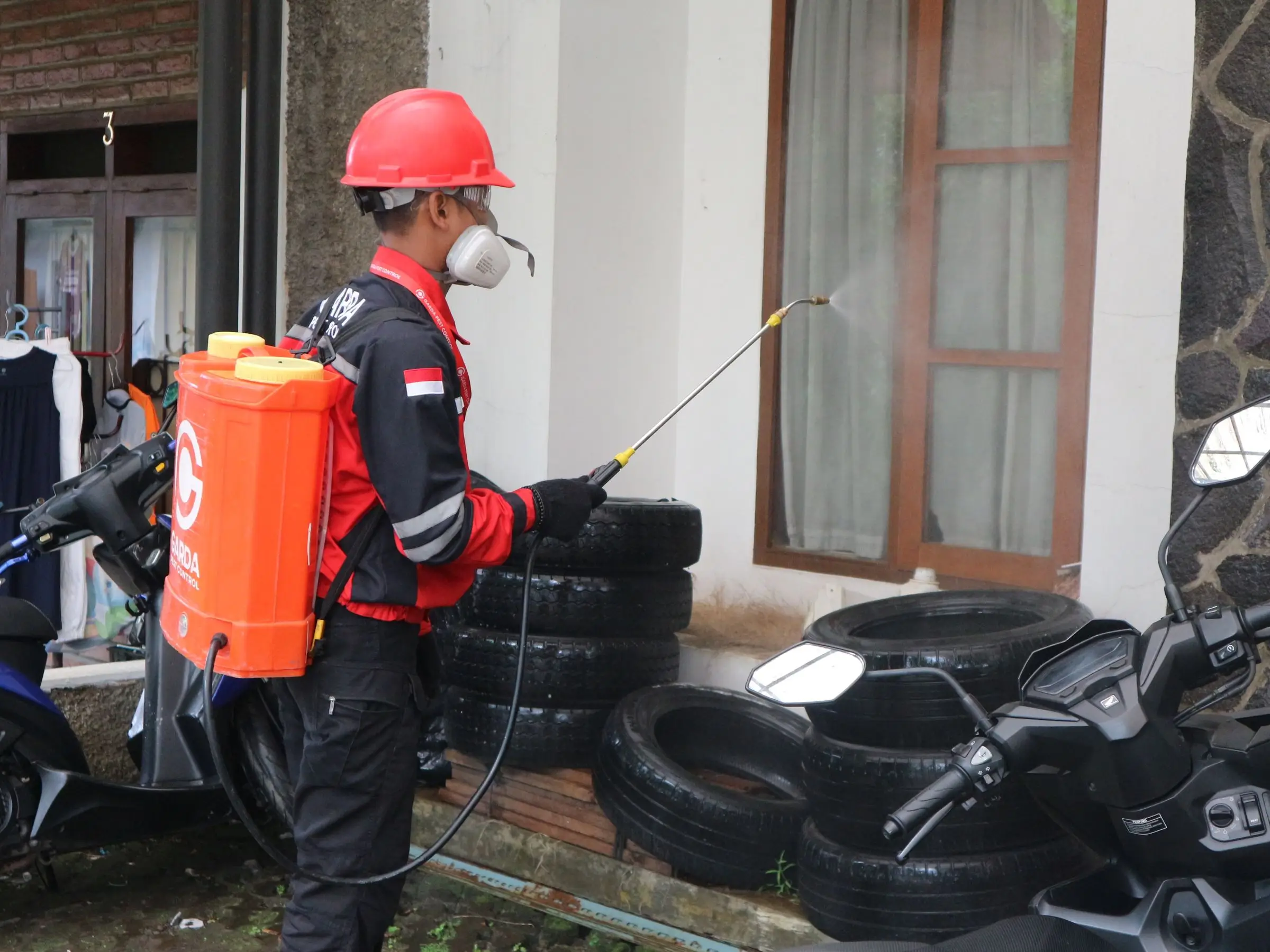
Pest control technician in a respirator and hard hat spraying around a house with a backpack sprayer
Photo: Garda Pest / Pexels

What pest control software has to handle

Recurring routes that stay dense

Pest control profit comes from route density. Quarterly and bi-monthly customers need to regenerate on schedule, cluster by area and leave room for new sales without breaking the route. The software should rebuild routes when a customer skips or reschedules, show drive time between stops and let you move a whole day when weather or a sick tech scrambles the plan.

Chemical application records that hold up

Most states require detailed records of pesticide applications: product, EPA registration number, amount or dilution, target pest, application area, date and applicator. Exact rules vary by state, so check with your state's pesticide regulatory agency. The software should capture this on the tech's phone at the stop and export it cleanly, because rebuilding records from memory before an inspection is miserable.

Termite bonds and renewals

Termite work runs on annual renewals: a re-inspection, a renewal invoice and a record of every treatment and bait station check under the bond. Software should track bond start and renewal dates, schedule the inspection, bill the renewal automatically and keep the property diagram with the account. A missed renewal is lost revenue and, sometimes, a lapsed warranty you're still on the hook for.

Service agreements with autopay

Most residential pest customers sign an agreement: an initial service at one price, then recurring services at another. The software needs to bill the initial, start the recurring schedule, charge the card on file after each service or on a monthly plan, and handle cancellations cleanly. Chasing paper invoices for $100-odd quarterly services eats your office time.

Device tracking for commercial accounts

Restaurants, warehouses and food plants expect documented checks of every bait station, trap and light at each visit, often with barcodes. If you're growing commercial work, look for device barcoding, per-device findings and a service report the facility manager can hand to an auditor. GorillaDesk includes device barcoding on Pro, and PestPac is built for heavier commercial programs.

Top 3 pest control picks

Ranked by fit for this buyer. Prices from vendor pricing pages, checked Oct 18, 2026.

  1. GorillaDesk logo

    1.GorillaDeskTop pick

    Best for small route businesses

    From $49/mo

    billed monthly

    4.2out of 5
  2. FieldRoutes logo

    2.FieldRoutes

    Best for fast-growing routes

    Quote only

    price on request

    3.7out of 5
  3. Briostack logo

    3.Briostack

    Best for termite field bids

    Quote only

    price on request

    3.8out of 5

Pest control software by job

Detailed picks for each job your office handles.

Our picks, in detail

GorillaDesk logo

Our pickBest for small route businesses

GorillaDesk

Affordable, easy route software for pest and pool pros

4.2out of 5

GorillaDesk prices by route (schedule), not by user, which suits pest control: a two-route company with a part-time office person and an owner who rides along pays for two routes, not four seats. As of October 2026, Basic is $49/mo for one route, Pro $99/mo and Growth $149/mo, with unlimited users and one month free on yearly billing. Extra routes on Basic are $50 each for routes 2 and 3 and $30 each from route 4; on Pro and Growth they're $50 each. Chemical use records are included from Basic, with a material usage table on work orders that GorillaDesk says is built to meet state requirements. Pro adds QuickBooks Online sync, Stripe or Square subscription billing, device barcoding and an online portal. Owners commonly report its reporting is basic next to PestPac or FieldRoutes.

What we like

  • Route-based pricing with unlimited users
  • Chemical use records included from the $49 Basic plan
  • Free data migration and published prices

Watch out for

  • Reporting is basic compared with PestPac and FieldRoutes
  • QuickBooks sync and subscription billing need Pro
  • Texting is billed separately through SMS credits
FieldRoutes logo

Best for fast-growing routes

FieldRoutes

Route-based platform for pest and lawn companies

3.7out of 5

FieldRoutes is a pest and lawn platform built around recurring routes, with route optimization, recurring billing, a customer portal, review requests and marketing automation in one system. Review-site listings include pesticide usage and pest activity tracking among its features. Pricing is quote-only and based on your number of active customers rather than users, which can work in your favor if you run lean in the office. There's no free trial, only a demo. For a company growing from 3 routes to 10 and spending real money on door-to-door or digital sales, the marketing and retention tools are the reason to look. Owners commonly report a learning curve, complex configuration and uneven support response, so ask for a named onboarding contact.

What we like

  • Built for recurring pest and lawn routes
  • Marketing automation and review requests built in
  • Priced by active customers, not by seat

Watch out for

  • Quote-only, no free trial
  • Configuration is complex and takes time to learn
  • Owners report support responsiveness varies
Briostack logo

Best for termite field bids

Briostack

Pest control software with strong customer self-service

3.8out of 5

Briostack is aimed at small and midsize pest and lawn companies, and its standout for pest work is bidding from the field. Briostack says techs can diagram a property on satellite imagery, calculate square footage and mark bait station placement for termite jobs, then build and send the bid from the mobile app without calling the office. The tech app works offline, which helps in crawlspaces and rural routes with no signal. It also handles recurring scheduling, routing, billing and automated reminders for invoices, recurring services and warranty expirations. Pricing isn't published. Software Advice lists a starting price of $50/mo, and an undated third-party review describes per-user pricing with an annual contract (not published by the vendor). Owners commonly report reporting is less flexible than larger platforms.

What we like

  • Termite graphing and bids from the mobile app
  • Offline-capable tech app
  • Warranty-expiration reminders support renewals

Watch out for

  • No public pricing
  • Reporting is less flexible than larger platforms
  • Owners report occasional mobile sync issues

What makes pest control software different

Pest control is a subscription business delivered by truck. Most of your revenue comes from customers you'll see four to six times a year, and your margin depends on how many of them you can stack onto one route in one day. That puts route building at the center of the software in a way it isn't for HVAC or plumbing. General field service apps can repeat a job every 90 days. Pest software has to keep hundreds of those recurring stops grouped by area, flex the route when customers reschedule, and make room for this week's new sales without sending a tech across town twice.

Compliance is the second difference. Every application needs a record: product, EPA registration number, amount or dilution, target pest, where it went and who applied it. The details vary by state, but nearly every state expects you to keep these records and produce them on request. A pest-specific tool captures them on the tech's phone at each stop and prints them on the service ticket. With a general tool, you're building custom fields and hoping every tech fills them in.

Then there's termite work. Termite bonds renew yearly, carry warranty obligations, and need a property diagram showing treatment areas or bait station locations. Renewals that slip are lost revenue, and inspections that don't happen can leave you exposed on a claim. The software should treat a bond as its own thing with a renewal date, not just another recurring job.

Finally, billing. Pest customers expect to set up a card once and never think about it. Initial service pricing, recurring service pricing, monthly payment plans and cancellations all need to work without the office touching each account every quarter.

How to choose by company size

One route, owner in the truck

You need recurring scheduling, chemical records, invoicing and card payments. GorillaDesk Basic at $49/mo covers that for one route, with chemical use records included. If you want automatic subscription billing and QuickBooks Online sync, step up to Pro at $99/mo. Pay yearly to get a month free once you're sure. Don't buy an enterprise tool now. Your time is better spent selling the next 50 recurring accounts.

Two to five routes

Now route density and autopay matter more than anything. GorillaDesk Pro for five routes is $99 plus four extra routes at $50, or $299/mo, with unlimited users so your office person and a part-time salesperson don't add cost. If you're doing a lot of termite work, get a Briostack demo and look closely at the field bidding and diagramming. Start setting standards for chemical records now, before you have five techs doing it five ways.

Six to fifteen-plus routes

Here the question is whether you need more marketing and reporting muscle. GorillaDesk Pro at 10 routes is $99 plus nine routes at $50, or $549/mo, which is still predictable. FieldRoutes earns a look when you're adding routes fast and want sales, retention and review tools in the same system, priced by active customers. PestPac fits operators opening a second branch or running large commercial programs.

What pest control software costs

Prices are as of October 2026, from vendor pricing pages unless marked as third-party.

Company Option Monthly cost
1 route GorillaDesk Basic $49/mo
1 route GorillaDesk Pro $99/mo
5 routes GorillaDesk Basic $49 + 2 x $50 + 2 x $30 = $209/mo
5 routes GorillaDesk Pro $99 + 4 x $50 = $299/mo
10 routes GorillaDesk Pro $99 + 9 x $50 = $549/mo
Any size FieldRoutes Quote only, based on active customers
Any size Briostack Quote only; Software Advice lists from $50/mo
Multi-branch PestPac Quote only, modules priced separately

Yearly billing helps more than it looks on GorillaDesk, since it gives one month free. Five routes on Pro cost $3,289 a year paid yearly instead of $3,588 paid monthly, and the savings grow with every route you add. Only commit yearly once your routes and plan are settled, though.

Texting is a real line item in pest control because appointment reminders cut no-shows on recurring routes. GorillaDesk charges $5/mo for a local number plus credits: $50 for 1,000 texts, $100 for 2,500 or $200 for 8,000. A company with 800 recurring customers that sends a reminder and an on-the-way text for every quarterly visit sends roughly 6,400 texts a year, which fits in one $200 pack.

Payment processing on GorillaDesk runs through Stripe or Square, so your card rate is whatever you've agreed with them. On quote-only platforms, ask whether payments are bundled, what the rate is, and whether there's a monthly minimum.

Common mistakes when switching pest control software

Switching at the start of the busy season. In most of the country, spring brings ants and termite swarms and a wave of new sales. Move in late fall or winter, when routes are lighter and you have time to fix routing problems.

Losing service history and chemical records. Your application records are a legal record. Export every past application before you cancel, in a format you can produce for an inspector, and keep it even if it doesn't import into the new system.

Not migrating termite bonds as bonds. Bonds often come across as plain recurring jobs and lose their renewal date, original treatment date and diagram. List every active bond, its renewal date and its terms, and check each one after import.

Breaking autopay. Card tokens usually don't transfer between payment processors. Plan how customers will re-enter cards, send the request in batches, and track who hasn't updated. Otherwise your first month of recurring billing shows a hole.

Rebuilding routes from scratch. Your current routes reflect years of small decisions about who goes with whom. Import them as they are, run them for a cycle, then use the new optimizer to improve them gradually instead of reshuffling every customer on day one.

Skipping tech training on chemical entry. The record is only as good as what techs enter at the stop. Set up product lists with EPA numbers and default rates before go-live, and check every tech's first week of entries.
More pest control software reviews

Free tools and guides

Software categories

Questions owners ask

What is the best pest control software for a small business?

For most companies with 1 to 10 routes, we'd pick GorillaDesk. It's priced per route with unlimited users, starts at $49/mo as of October 2026, and records chemical use on every plan. Fast-growing companies that rely on marketing and door-to-door sales should get a FieldRoutes quote. Companies doing a lot of termite work should look at Briostack's field bidding tools.

How much does pest control software cost?

As of October 2026, GorillaDesk is $49 to $149/mo for one route, with extra routes at $30 to $50 each. A five-route company on GorillaDesk Pro pays $299/mo. FieldRoutes, PestPac and Briostack are quote-only. FieldRoutes prices by active customers, and Software Advice lists Briostack from $50/mo. Budget for texting too: GorillaDesk sells SMS credits starting at $50 for 1,000.

Does pest control software handle state chemical reporting?

The pest-specific tools record what most state reports need: product, EPA number, rate, target pest, area and applicator. GorillaDesk says its material usage table is designed to meet state requirements, and FieldRoutes lists pesticide usage tracking among its features. Report formats differ by state, so confirm with the vendor that their export matches your state's format, and check your state agency's current rules.

Can I use Jobber or Housecall Pro for pest control?

You can, especially for a one-truck operation that does mostly one-off jobs. Both handle recurring jobs, quoting and card payments well. The gap is chemical application records and termite renewals, which you'd have to build with custom fields and checklists and export yourself. Once you have a few hundred recurring accounts, a pest-specific tool usually saves more office time than it costs.

Is PestPac good for small pest control companies?

PestPac is built for mid-size to enterprise operators with multiple branches, commercial IPM programs and in-house accounting needs. It's quote-only, and owners commonly report that each module is an extra cost and that the interface takes time to learn. A one or two-route company will usually pay for more than it uses. Revisit it if you open a second branch.