Skip to content
BlueCollarStacks

Best Pest Control Invoicing Software

GorillaDesk is the best pest control invoicing software for most small operators: route-based pricing from $49/mo, unlimited users and subscription billing. Bigger route shops should get a FieldRoutes quote.

By BlueCollarStacks EditorialUpdated

We may earn a commission from links on this page. How we make money

The short answer

Our pick

GorillaDesk is the best invoicing software for most small pest control companies.

It's priced per route instead of per user, includes subscription billing and cards on file, and tracks chemical use on the same visit you bill for. Operations past roughly ten routes that want marketing automation and heavier reporting should get a FieldRoutes quote.

GorillaDesk logo

GorillaDesk

Small pest & pool routes

From $49/mo billed monthly

Request a demo · checked Oct 18, 2026

Pest control billing is mostly the same bill, over and over: a quarterly general pest service, a monthly mosquito visit in season, an annual termite renewal, and a stack of commercial accounts that want an invoice with the service report attached. The hard part isn't writing invoices. It's making sure 400 recurring customers get charged on time, the free re-service doesn't generate a bill, and the restaurant gets its paperwork. We ranked six tools on that work. For scheduling, routing and the rest of the stack, see our guide to pest control software.

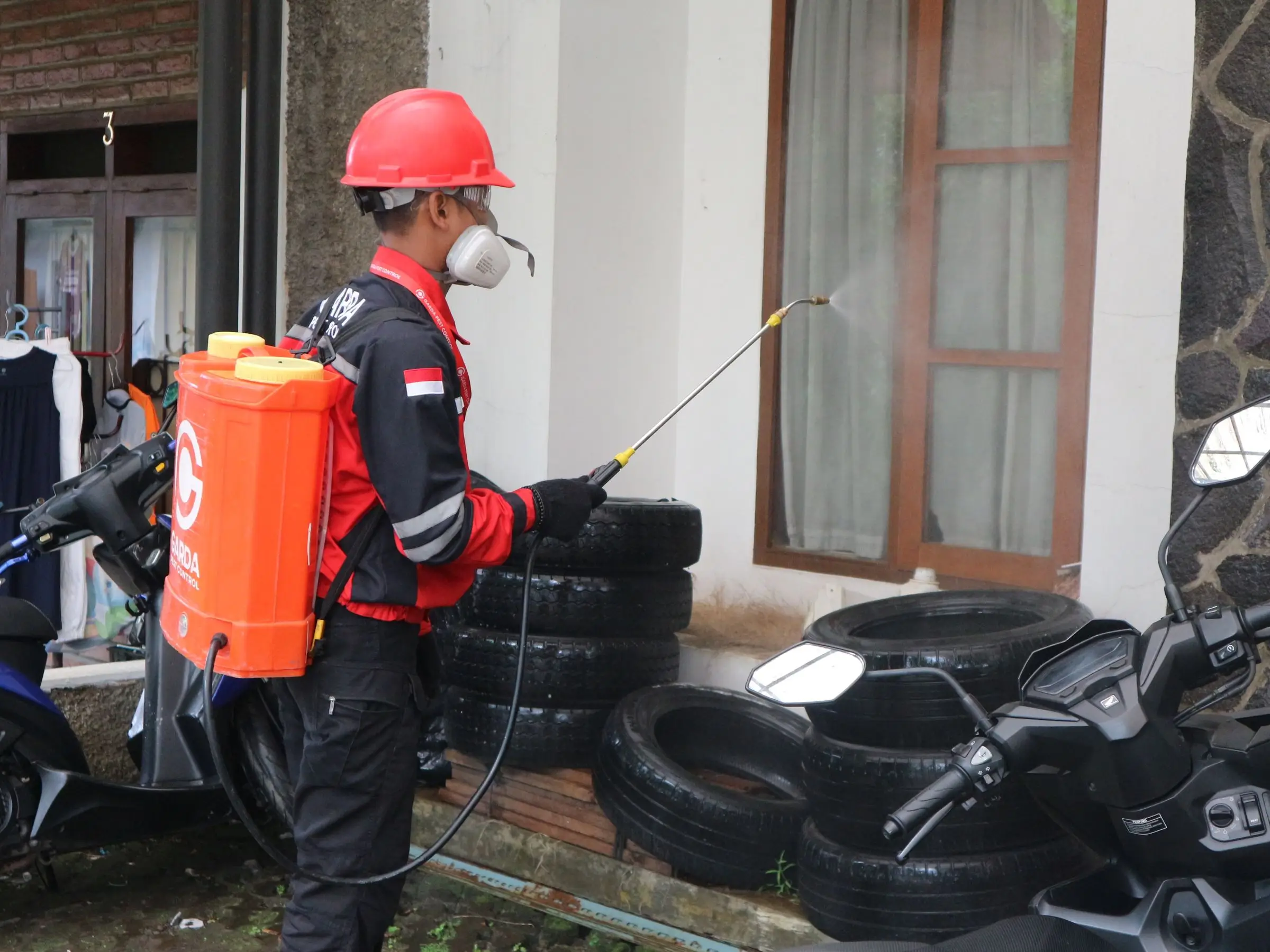
Pest control technician in a respirator and hard hat spraying around a house with a backpack sprayer
Photo: Garda Pest / Pexels

Our picks at a glance

Ranked by fit for this buyer. Prices from vendor pricing pages, checked Oct 18, 2026.

  1. GorillaDesk logo

    1.GorillaDeskTop pick

    Best for small pest shops

    From $49/mo

    billed monthly

    4.2out of 5
  2. FieldRoutes logo

    2.FieldRoutes

    Best for 10+ route operations

    Quote only

    price on request

    3.7out of 5
  3. Jobber logo

    3.Jobber

    Best for pest plus lawn crews

    From $29/mo

    billed annually

    4.1out of 5
  4. Housecall Pro logo

    4.Housecall Pro

    Best for residential autopay

    From $59/mo

    billed annually

    4.1out of 5
  5. FieldPulse logo

    5.FieldPulse

    Best for commercial agreements

    Quote only

    price on request

    3.9out of 5
  6. Workiz logo

    6.Workiz

    Best for one-off treatments

    Quote only

    price on request

    3.8out of 5

Our picks, in detail

GorillaDesk logo

Our pickBest for small pest shops

GorillaDesk

Affordable, easy route software for pest and pool pros

4.2out of 5

GorillaDesk was built for route businesses like pest, lawn and pool, and its pricing shows it. You pay per route, not per person: Basic is $49/mo for one route, Pro $99/mo and Growth $149/mo, with additional routes at $30 to $50/mo each and unlimited users on every plan, as of October 2026. Yearly billing gets you a month free. On the billing side it offers subscription billing to automate recurring payments, cards on file through Stripe or Square, and invoicing tied to the visit. Techs record chemical use in the field, which GorillaDesk says helps you meet state regulatory requirements, and device management covers stations at commercial accounts. Migration of contacts, notes and starting balances is free. Reporting is basic next to PestPac or FieldRoutes, and SMS is billed separately through credits.

What we like

  • Per-route pricing with unlimited users
  • Subscription billing and cards on file for recurring plans
  • Chemical use and device tracking on the same visit you bill

Watch out for

  • Reporting is basic compared with PestPac and FieldRoutes
  • SMS costs extra ($5/mo number plus credits)
  • Card rates depend on your Stripe or Square account
FieldRoutes logo

Best for 10+ route operations

FieldRoutes

Route-based platform for pest and lawn companies

3.7out of 5

FieldRoutes is aimed at pest and lawn companies that have outgrown the starter tools. Recurring billing, route optimization and marketing automation are its core, and it's priced by number of active customers rather than users, which is how pest companies already think about their size. That pricing model is the main reason to look at it once you're running ten or more routes with thousands of recurring accounts. There's no published price and no free trial, only a demo, so you'll negotiate. Users commonly report a learning curve and complex configuration, and that support responsiveness varies. For a two-truck shop it's more system than you need. For a 15-route company juggling autopay failures, renewals and upsells, it's worth a serious look.

What we like

  • Recurring billing and marketing automation built for pest and lawn
  • Priced on active customers, not seats
  • Route optimization included

Watch out for

  • No published pricing and no free trial
  • Complex setup and a learning curve
  • Support responsiveness varies, per users
Jobber logo

Best for pest plus lawn crews

Jobber

The easiest all-rounder for small residential crews

4.1out of 5

Jobber isn't a pest product, but it's a good invoicing tool for a small company that does pest control alongside lawn care, mosquito or general home services. Recurring jobs can invoice per visit or be batched, the client hub lets customers pay online, and payments run at 2.9% + 30¢ by card or 1% by ACH. Pricing is published as of October 2026: Core is $29/mo billed annually for one user, Connect is $149/mo for five users and Grow $229/mo for five, all billed annually. The gap for pest work is compliance. There's no built-in chemical application log or device tracking, so you'd be using custom fields and forms to capture EPA numbers and target pests, which is workable for residential and awkward for commercial accounts.

What we like

  • Polished invoices and online payments
  • Batch invoicing for recurring visits
  • Published prices and a 14-day trial

Watch out for

  • No built-in chemical log or device tracking
  • Per-user brackets cost more than per-route pricing as you grow
Housecall Pro logo

Best for residential autopay

Housecall Pro

Strong marketing tools and a fast mobile app

4.1out of 5

Housecall Pro suits a residential pest company that sells mostly to homeowners and wants the billing to feel modern. Recurring jobs, cards on file, online booking and review requests all live in one app, and card processing starts at 2.59% with ACH at 1%, which is a little cheaper than Jobber on cards. Plans as of October 2026: Basic $59/mo (1 user), Essentials $149/mo (up to 5 users) and MAX $299/mo (up to 8 users), billed annually. Like Jobber, it doesn't come with pest-specific compliance tools, so chemical records and device counts need custom checklists. Owners commonly report that the better features sit on MAX and that support response is inconsistent.

What we like

  • Card processing from 2.59%, ACH at 1%
  • Online booking and reviews help residential growth
  • Simple for techs to learn

Watch out for

  • No pest-specific chemical logs or device tracking
  • Best features on the $299/mo MAX plan
FieldPulse logo

Best for commercial agreements

FieldPulse

Flexible job management with solid estimating

3.9out of 5

FieldPulse is a general service platform with strong configurable estimates, service agreements and project tracking, which makes it a decent fit for a pest company with a growing commercial book: restaurants, property managers, warehouses. You can set up agreements with recurring visits, track costs per account and invoice through a customer portal, with QuickBooks sync. FieldPulse doesn't publish prices. Third-party estimates run roughly $30 to $150 per user per month, with one competitor estimating about $300 to $500/mo for a 10-person team before add-ons (not published by the vendor). Phones, fleet tracking and AI dispatch are add-ons. It isn't built around pest compliance, and users commonly report occasional mobile app sync issues.

What we like

  • Service agreements and a customer portal for commercial accounts
  • Configurable estimates and proposals
  • Guided onboarding from the vendor

Watch out for

  • Quote only; third-party estimates vary widely
  • Phones, fleet and AI dispatch cost extra
  • No pest-specific compliance features
Workiz logo

Best for one-off treatments

Workiz

Built-in phones and call tracking for on-demand service work

3.8out of 5

Not every pest call is recurring. Bed bug treatments, wasp nests, rodent exclusion and wildlife removal are one-time jobs that start with a phone call and end with a bigger invoice. Workiz is built for that on-demand flow: the call, the estimate, the job and the invoice in one place, with inventory and job costing included. Its phone and answering tools are sold separately. Workiz moved to quote-only pricing in 2026, though there's a 7-day free trial. It's a weaker fit for a business that's 90% quarterly recurring service, and it has no chemical logs or device tracking built in. Users commonly report occasional mobile sync glitches.

What we like

  • Good flow for phone-driven, one-time treatments
  • Inventory and job costing included
  • 7-day free trial

Watch out for

  • Quote-only pricing since 2026
  • Less suited to large recurring route books
  • Phone and marketing tools cost extra

What pest control shops need from invoicing software

Pest control billing is recurring billing with compliance attached. A typical residential book looks like this: an initial service priced higher than the rest, then quarterly general pest visits, plus seasonal add-ons like mosquito or a termite bond that renews once a year. Each of those bills differently, and the software has to keep them straight for hundreds of accounts without you touching each one.

The jobs that matter most:

  • Automatic billing for recurring plans. Either charge per service when the visit is completed, or bill a flat monthly amount. You need cards on file, automatic charges and retries when a card declines.
  • No-charge re-services. When a customer calls with ants three weeks after the quarterly visit, the callback is usually free under the agreement. The software should schedule it without sending a bill, and still record what was applied.
  • Service records tied to the invoice. Commercial accounts want to see what product was applied, where, target pests, and device activity at bait or monitoring stations. Many states also require application records. If the tech logs this on the visit, the invoice and the record come from one source.
  • Batch invoicing for commercial accounts. A property manager with nine buildings on net-30 wants one invoice a month, not nine emails. You need to group visits and send them together.
  • Renewal reminders. Annual termite renewals are easy money that's easy to forget. A renewal that slips is often a customer lost to the next company that knocks.

How the picks compare

The biggest difference between these tools is how they charge you, and it changes the answer as you grow.

GorillaDesk and FieldRoutes are the two built for route businesses. GorillaDesk charges per route with unlimited users, which is the best deal for a small shop with office help. A three-route company on Basic pays $149/mo, and adding a second office person costs nothing. FieldRoutes charges on active customers, includes marketing automation, and is the more serious system once you're past ten routes. PestPac, which we didn't rank, is the third big pest platform. It's built for multi-branch operators and is quote only, with owners commonly reporting that modules are sold as upgrades. Briostack is another pest-focused option for small and mid-size shops, also quote only.

Jobber, Housecall Pro, Workiz and FieldPulse are general service tools. Their invoices and payment flows are polished, often better than the pest-specific tools, and Jobber and Housecall Pro publish prices. What they lack is pest compliance out of the box: chemical logs, EPA registration numbers, device tracking. If your book is mostly residential, a custom form per visit covers it. If you have a growing commercial book with audit paperwork, the gap gets painful.

Payment fees matter more than the subscription here. Say you have 400 recurring customers paying a hypothetical $50 a month. That's $20,000 a month through your processor. On Jobber's card rate of 2.9% + 30¢, that's about $700 in fees a month. On ACH at 1%, it's about $200. Getting even half your recurring customers onto bank payments saves more than most of these subscriptions cost.

If you're comparing against tools other trades use, our roundup of invoicing software for contractors covers the general-purpose options.

What to look for before you sign

  • Test a failed card. Ask how the system handles a declined recurring charge: automatic retry, text to the customer, a flag for the office? Declines on autopay are where pest revenue quietly leaks.
  • Set up a free re-service. In the trial, schedule a callback under an existing plan and confirm it records the treatment without creating an invoice.
  • Check the service record on a commercial invoice. Make sure the product, amount, location and device checks can print or attach to what the customer receives.
  • Price your real headcount. Count routes and every person who logs in. Per-route pricing (GorillaDesk) and per-customer pricing (FieldRoutes) behave very differently from per-user brackets (Jobber, Housecall Pro).
  • Ask about migration and starting balances. GorillaDesk migrates contacts, addresses, notes and starting balances for free. Others may charge or leave it to you. Moving open balances wrong is how you end up re-billing paid customers.
  • Find out who sets card rates. GorillaDesk runs payments through your own Stripe or Square account, so the rates are theirs. Jobber and Housecall Pro publish their own.
  • Switch after the busy season. Changing billing systems in May, with the phones ringing, is asking for missed charges. Late fall or winter is calmer for most pest shops.

What it costs

Prices are as of October 2026. GorillaDesk is billed monthly per route (yearly billing gives a month free); Jobber and Housecall Pro figures are billed annually. Card fees are extra.

Shop size GorillaDesk Basic GorillaDesk Pro Jobber Housecall Pro
1 route, owner-operator $49/mo $99/mo $29/mo (Core, 1 user) $59/mo (Basic, 1 user)
5 routes, 5 techs + office $209/mo, unlimited users $299/mo, unlimited users $229/mo (Grow, 5 users); more users push you to the 10-user bracket $149/mo (Essentials, up to 5 users) or $299/mo (MAX, 8 users)
15 routes, 15 techs + office $509/mo, unlimited users $799/mo, unlimited users $399/mo (Grow, 15 users) plus any users beyond 15 About $614/mo (MAX + 9 users at $35)

GorillaDesk math: Basic is $49 for the first route, $50 each for routes two and three, then $30 for each route after that. Pro is $99 plus $50 per additional route. FieldRoutes, PestPac, Briostack, Workiz and FieldPulse don't publish prices.

Don't forget texting. GorillaDesk charges $5/mo for an SMS number plus credits ($50 for 1,000 messages). A 400-customer book that gets a reminder text and a completion text each quarter sends about 3,200 messages a year: roughly $100 to $200 in credits depending on the pack, plus $60 for the number.

Related guides

Questions owners ask

What is the best invoicing software for a small pest control business?

For most one- to five-truck pest companies, GorillaDesk is the best fit. It's priced per route from $49/mo with unlimited users, handles subscription billing and cards on file, and records chemical use on the same visit you invoice. If you also do lawn care or general services, Jobber is a good alternative with published pricing from $29/mo billed annually.

How do pest control companies bill recurring customers?

Most bill per service (charge the card after each quarterly visit) or on a flat monthly plan that spreads the annual price across 12 payments. Per-service billing is simpler; monthly plans smooth cash flow and reduce cancellations. Either way, keep cards on file, set up automatic retries for declined cards, and make sure re-services under the agreement don't generate a new charge.

Should a pest control invoice include the service report?

For commercial accounts, yes. Restaurants, food plants and property managers often need a record of what was applied, where, and device activity for their own audits. Residential customers mostly want to know what you did and when you're coming back. Tools like GorillaDesk tie chemical use to the visit so the record and the invoice come from the same job.

What's cheaper for pest control, per-user or per-route pricing?

Per-route usually wins once you have office staff. A five-route company with two office people on GorillaDesk Basic pays $209/mo regardless of users (as of October 2026). On a per-user plan, those seven logins push you into a bigger user bracket. Per-user tools can be cheaper for a solo operator who runs one route alone.

Can I use QuickBooks alone to invoice pest control customers?

You can, and some one-truck operators do. QuickBooks handles recurring invoices and payments fine. What it doesn't do is schedule routes, record chemical applications or show the tech what's due at each stop, so you end up keeping that in a second system or on paper. Most shops move to a route-based tool once they pass a couple hundred recurring accounts.

Is PestPac worth it for a small company?

PestPac is built for mid-size to enterprise operators that need IPM programs, multiple branches and advanced accounting. It's quote only, and users commonly report that every module is an upgrade at extra cost, plus a dated interface. A small company with a few routes is usually better served by GorillaDesk, and a growing one should compare PestPac against FieldRoutes before signing.