Roofing Calculator: Squares, Bundles & Material Cost
Enter the roof footprint, pitch and waste factor to get squares, shingle bundles, underlayment rolls and an estimated material cost. Use it to sanity-check a quote, not to replace a measurement.
We may earn a commission from links on this page. How we make money
This roofing calculator turns a footprint and a pitch into the numbers you actually order from: roof area, squares, squares with waste, shingle bundles and rolls of synthetic underlayment. Add your supplier's price per square and it gives you a material cost too. It's built for a quick number at the kitchen table or a check against a measurement report before you sign the material order. For the software that does this inside your estimates, CRM and production schedule, see our roofing software guide.
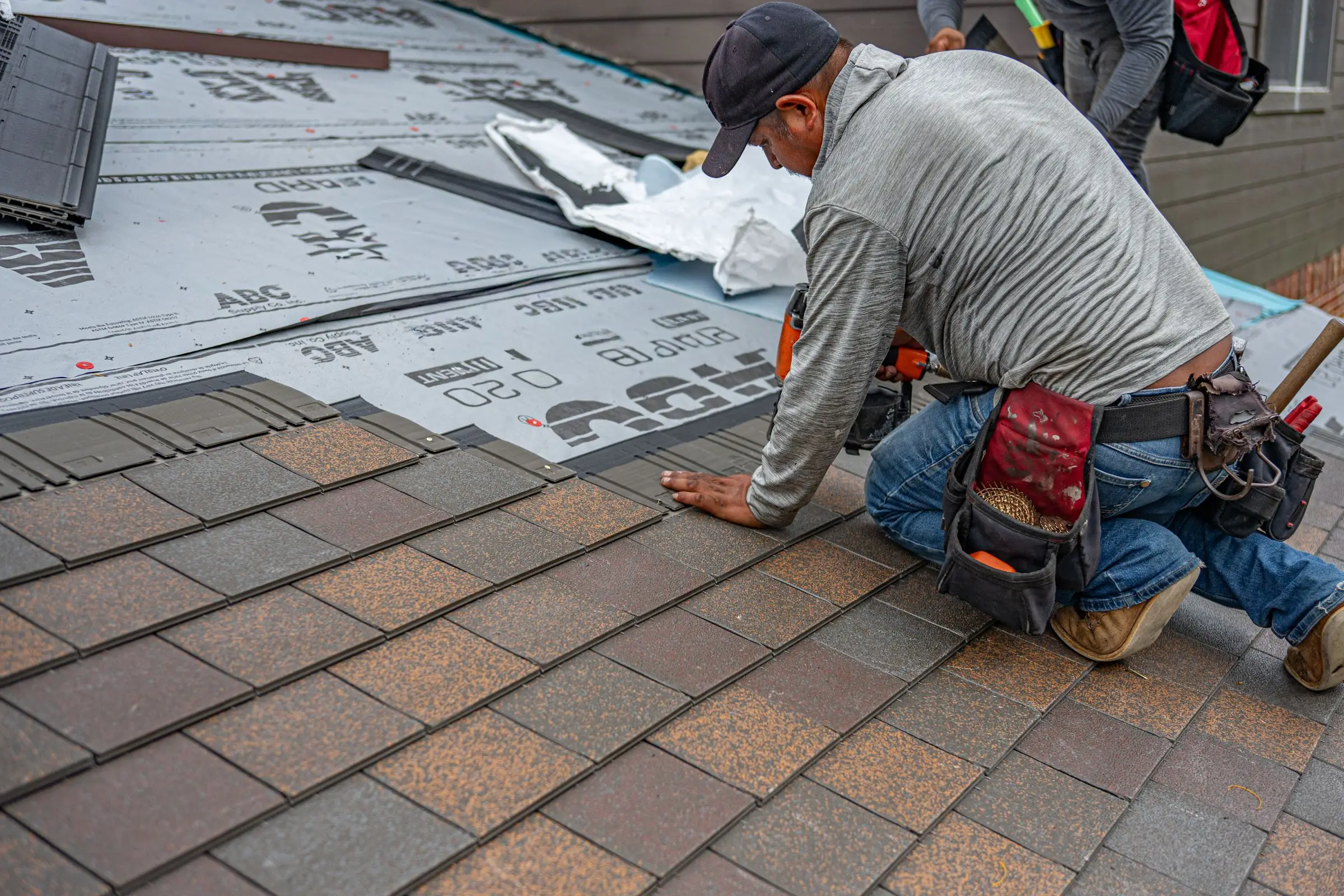
Roof squares, bundles and material cost
Results
Stop retyping numbers. Field software builds the estimate and sends it from your phone.
See our picks for estimating software built for roofing contractors.
How to use this calculator
- Enter the footprint. Measure the length and width of the roof outline from above in feet, including the overhang at the eaves and rakes. If the house isn't a rectangle, break it into rectangles, add up their areas and enter the total footprint in square feet instead.
- Pick the pitch. Choose the rise per 12 inches of run, from 1/12 to 12/12. If different sections have different pitches, run each section separately and add the results.
- Set the waste factor. The default is 10% for a gable roof and 15% for a hip or complex roof. Raise it for roofs with lots of valleys, dormers, skylights or short runs.
- Add a price per square (optional). Use your supplier's current price for the shingle you're quoting, per 100 square feet. The calculator multiplies it by squares including waste.
- Read the results. You'll see roof surface area, squares, squares with waste, bundles, underlayment rolls and an estimated material cost.
If you already have an aerial measurement report, skip the footprint and pitch and check the report's total squares against your own waste factor instead. Reports often give several waste options; pick the one that matches how your crew actually cuts.
The formula
The calculator works in four steps.
Roof surface area = footprint × pitch multiplier, where the multiplier is √(1 + (rise ÷ 12)²). A steeper roof has more surface over the same footprint.
| Pitch | Multiplier | Pitch | Multiplier |
|---|---|---|---|
| 3/12 | 1.031 | 8/12 | 1.202 |
| 4/12 | 1.054 | 9/12 | 1.250 |
| 5/12 | 1.083 | 10/12 | 1.302 |
| 6/12 | 1.118 | 12/12 | 1.414 |
| 7/12 | 1.158 |
Squares = roof area ÷ 100. Squares with waste = squares × (1 + waste factor).
Bundles = squares with waste × 3, rounded up. Synthetic underlayment rolls = squares with waste ÷ 10, rounded up, assuming a roll that covers 10 squares.
Estimated material cost = squares with waste × your price per square.
Worked example
Say you're quoting a simple gable ranch. The footprint, overhangs included, is 40 ft × 30 ft = 1,200 sq ft. The pitch is 6/12.
- Pitch multiplier: √(1 + 0.25) = 1.118
- Roof area: 1,200 × 1.118 = 1,341.6 sq ft
- Squares: 13.42
- Squares with 10% waste: 13.42 × 1.10 = 14.76
- Bundles: 14.76 × 3 = 44.3, rounded up to 45
- Underlayment rolls: 14.76 ÷ 10 = 1.48, rounded up to 2
- Material cost at a hypothetical $150 per square: 14.76 × $150 = about $2,214
Now make the same footprint a hip roof at 8/12 with 15% waste. Area becomes 1,200 × 1.202 = 1,442 sq ft, or 14.42 squares, and 16.59 squares with waste. That's 50 bundles and 2 rolls. Same house footprint, five more bundles, which is the kind of gap that leaves a crew short on a Friday afternoon.
Things the calculator can't see
Accessories. Ridge cap, hip cap and starter strip are ordered by linear foot, not by square. So are drip edge, ice and water shield along the eaves and in valleys, and step and counter flashing. Measure ridges, hips, eaves, rakes and valleys and add those materials yourself.
Low slopes. Most shingle manufacturers and the residential building code don't allow asphalt shingles below 2/12, and slopes from 2/12 up to 4/12 typically need extra underlayment. If you enter 1/12, the math still runs, but the roof needs a low-slope system, not shingles.
Tear-off and decking. The calculator doesn't know how many layers are coming off or how much rotted decking you'll find. Price tear-off per square per layer, and carry a decking allowance per sheet in your contract.
Mixed pitches and complex geometry. A main roof at 6/12 with a 10/12 front gable and a 3/12 porch is three calculations, not one. Dormers, turrets and cut-up roofs add waste the default factor may not cover.
Labor, disposal and permits. Dumpster, haul-off, permit fees and crew labor aren't in the material cost. Neither are taxes or delivery fees.
Exact measurements. A tape-measured footprint is a good estimate. For insurance work and anything you're bidding tight, an aerial or drone measurement report is the number to order from.
Questions owners ask
How many bundles of shingles are in a square?
Most standard three-tab and architectural shingles come three bundles to a square, meaning three bundles cover 100 square feet of roof. Some heavier designer and premium shingles take four or five bundles per square. Check the wrapper or the manufacturer's spec sheet, and adjust the bundle count if yours aren't three to a square.
What waste factor should I use for a roof?
A simple gable roof with few penetrations usually works at about 10%. Hip roofs and cut-up roofs with valleys, dormers and multiple facets need around 15%, sometimes more. The calculator defaults to 10% for gable and 15% for hip or complex. If your crew consistently runs short or long, adjust the factor to match your actual tear-off history.
How do I find my roof pitch without getting on the roof?
From the attic, hold a level against the underside of a rafter, mark 12 inches along the level, and measure straight up from that mark to the rafter. That vertical distance in inches is the rise per 12. You can also use a pitch app on a phone held against a rake board, or read it from an aerial measurement report.
Is roof area the same as house square footage?
No. A 2,000 sq ft two-story house might have a roof footprint near 1,000 sq ft, while a 2,000 sq ft ranch has a footprint of 2,000 sq ft plus overhangs. Then pitch adds area on top of the footprint. Always measure the roof footprint including eaves and rakes, not the living space.
Does this calculator include ridge cap, starter and drip edge?
No. It calculates field shingles and synthetic underlayment only. Ridge cap and starter strip are ordered by linear foot of ridge, hip and eave. Drip edge, ice and water shield, flashing, vents and nails are separate line items too. Measure those lengths and add them to your order.