How to Start a Pest Control Business
Licensing comes first. Most states require a certified applicator and a pest control business license before you can treat a single home for hire, and some require documented supervised experience before you can even test.
We may earn a commission from links on this page. How we make money
Pest control is one of the better small trades to own: recurring quarterly service, steady demand in every season, and customers who rarely want to switch once the bugs are gone. It's also one of the most regulated. You'll be applying pesticides on other people's property, and states control that tightly. This guide covers the licensing path (which varies by state, so treat it as a map of what to ask), typical startup costs, how to price recurring service, the records you'll keep, and the software built for pest routes.
Step 1: Learn your state's licensing path first
Everything else depends on licensing, so start here. Pesticide application for hire is regulated at the federal level under FIFRA and by each state on top of that. Federal rules set minimum standards for certifying applicators of restricted-use pesticides, including a minimum age of 18. States run their own certification programs, and most go well beyond the federal minimum for anyone doing pest control for hire.
What you'll typically run into, though the details vary by state:
- Individual applicator certification. A core exam on safety, labels and laws, plus a category exam for each type of work. Structural pest control often splits into categories like general household pests, wood-destroying organisms (termites) and fumigation. Lawn and ornamental work is usually a separate category.
- Licensing for general-use products too. In many states, you need a license to apply any pesticide for hire, not only restricted-use products. Don't assume over-the-counter products are exempt when you're being paid.
- A business license. Many states license the pest control company separately from the person, and require a certified applicator to serve as the qualifying or responsible operator for the business. Florida, for example, requires each licensed business location to employ a certified operator in charge, certified in each category the business works in.
- Experience requirements. Some states require documented experience under a licensed operator before you can test for the certification that lets you run a business. Florida's rules require a documented number of supervised jobs in each category. If your state works this way, plan to work for an established company first.
- Technician licensing. Employees who apply products under your supervision may need their own registration, training or ID card.
- Continuing education to keep the license active.
Your state's lead pesticide agency, usually the department of agriculture, publishes the requirements and often the study manuals. Call them, ask for the requirements in writing for the services you want to offer, and ask what the experience, insurance and bonding requirements are for the business license.
Separate credentials often apply to termite inspections for real estate transactions (wood-destroying insect reports), fumigation, and work in schools or food-handling facilities.
Step 2: Set up the business and insurance
Once you know the licensing path, the general business setup is straightforward.
- Register the business. An LLC or DBA with your state, a free EIN from the IRS, and any city or county business license. Fees vary by state and locality.
- Insurance with pesticide coverage. General liability for a small pest operator typically runs around $800 to $3,000 a year depending on state, services and payroll. Read the policy closely: some standard policies exclude pesticide application or drift. Some states require proof of liability insurance or a bond to issue the business license.
- Commercial auto. Your vehicle carries pesticides and equipment every day. Your insurer needs to know.
- Workers' comp once you have employees, required in nearly every state with rules that vary by state.
Termite work carries extra risk because claims can surface years after the treatment. If you plan to offer it, talk to your insurer about how termite damage claims are handled before you sell your first termite contract.
Step 3: Equip the truck for general pest first
Start with general household pest work (ants, roaches, spiders, rodents) for recurring residential accounts. It needs the least equipment and builds the recurring base.
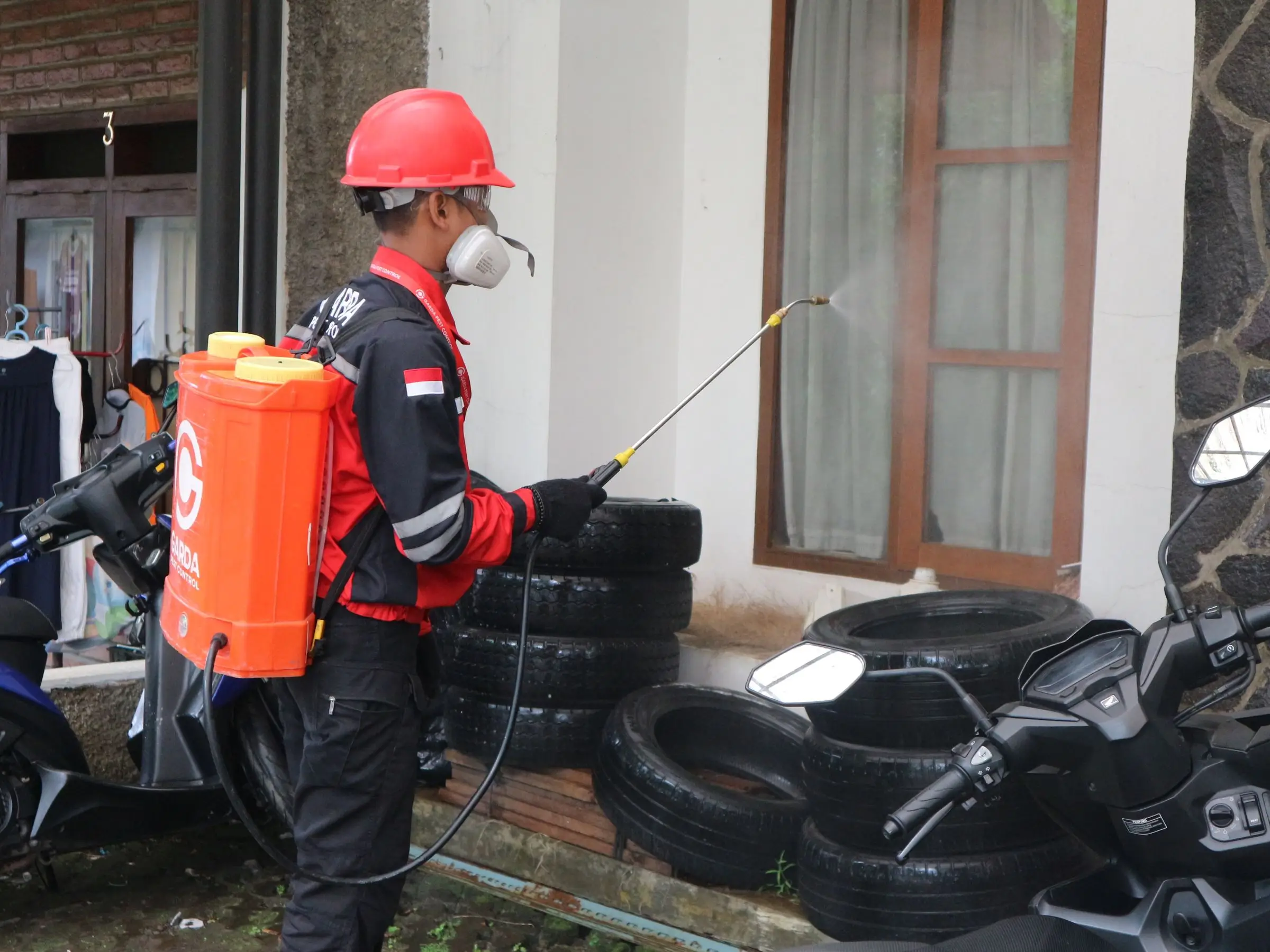
- Sprayers: a couple of compressed-air hand sprayers for interior and crack-and-crevice work, and a backpack sprayer for exterior perimeters.
- Dusters, bait guns and a granular spreader.
- Rodent stations, glue boards and insect monitors.
- Inspection tools: a bright flashlight, an inspection mirror, a moisture meter and a knee pad.
- Personal protective equipment as required by each product label: gloves, eye protection and, for some products, a respirator.
- Lockable, ventilated storage in the truck, a spill kit, and every product in its original labeled container.
A power sprayer rig with a tank and hose reel is useful for exterior perimeter, lawn and termite work, but many general pest techs work for months without one.
Product distributors generally sell professional products to licensed businesses, so expect to show your license to open an account. The label is the law: follow it for rates, sites, PPE and re-entry intervals, and keep a copy of every label and safety data sheet on the truck.
Step 4: Price recurring service, not one-off sprays
The value of a pest control business is its recurring accounts. A customer on quarterly service brings in four visits a year, every year, often for a long time. Price to build that base.
A common structure:
- Initial service at a higher price. The first visit is longer, uses more product and often includes interior work.
- Recurring service quarterly or bimonthly at a lower per-visit price, usually exterior-focused, with interior treatment as needed.
- Free re-service between visits if pests come back. It's what customers expect, and it's a real cost, so build it into the recurring price.
- Specialty work quoted separately: termites, bed bugs, mosquitoes, wildlife exclusion and rodent exclusion.
Build each price from time and materials. Hypothetically, if a recurring exterior service takes 30 minutes on site plus 15 minutes of drive, and your target is $100 per hour plus about $10 in product, that visit costs you 45 minutes of time ($75) plus $10, or $85 before any profit margin for callbacks. Price below that and every new account makes you busier and poorer.
Here's how the same hypothetical math plays out across a year for one quarterly account, assuming one free re-service call:
| Visit | Time incl. drive | Product | Cost at $100/hr | What you might charge |
|---|---|---|---|---|
| Initial service (interior + exterior) | 1.5 hrs | $35 | $185 | $195 |
| Quarterly service (3 visits after initial) | 45 min each | $10 each | $255 total | $330 total ($110 each) |
| One free re-service between visits | 45 min | $10 | $85 | $0 |
| Year one | $525 | $525 |
That account breaks even in year one at your target rate because of the initial visit and the callback. Year two, with four quarterly visits at $110 and maybe one callback, it brings in $440 against about $425 in cost at that same rate. If the margin looks thin, that's the point: your target hourly rate already includes your pay, so the profit has to come from tighter routes, fewer callbacks and annual price increases. Run this math with your own times before you print a price sheet.
Keep your stops dense. Pest routes make money the same way lawn routes do: more accounts per square mile means less unpaid driving.
Step 5: Set up records before your first application
Most states require you to keep records of every pesticide application, and inspectors can ask to see them. Typical fields include the date, the service address, the product name and EPA registration number, the amount applied, the target pest, the treated area and the applicator's name. How long you keep them and what else is required varies by state.
Decide now how you'll record them. Paper forms work for a few accounts, but they get lost, they're hard to search when a customer calls with a question, and they're painful during an inspection. Recording the application on the tech's phone at the end of each service, attached to the account, is the habit to build from your first customer.
Also keep customer-facing documentation: what you applied, any re-entry instructions, and what the customer should do (and not do) before your next visit.
Step 6: Software you will need
Pest control is route work with regulatory paperwork attached, so general job apps aren't always the best fit. Our guide to software for pest control businesses compares the options in detail. At minimum, you want:
- Recurring routes for quarterly, bimonthly and monthly service that schedule themselves and optimize drive order.
- Application records on the phone, with product, EPA registration number and amounts captured at each stop.
- Recurring billing and autopay with cards on file, so quarterly customers are charged automatically.
- Service agreements and re-service tracking, so a callback is logged against the right account.
- Customer reminders by text or email before each visit.
Real options, with prices as of October 2026:
- GorillaDesk is built for small pest control, pool and lawn route businesses. It prices by route, not by user: Basic is $49/mo for one route, Pro is $99/mo and Growth is $149/mo, each with unlimited users. Additional routes are $30 to $50/mo each depending on plan. Texting needs an SMS number ($5/mo) and SMS credits ($50 per 1,000). Users commonly report that reporting is basic compared with the larger pest platforms.
- PestPac (a WorkWave product) is aimed at mid-size and larger operators that need multi-branch support and deeper accounting. Pricing is quote-only, and users commonly report that many modules cost extra.
- FieldRoutes focuses on pest and lawn companies with recurring routes, with route optimization and marketing automation. Pricing is quote-only, based on active customers, and there's no free trial.
- Briostack targets small-to-midsize pest and lawn companies and has no public pricing page. Third-party estimates put it around $50/mo to start (not published by the vendor), so get a written quote. Users commonly report its reporting is less flexible than the larger platforms.
If you'd rather use a general field service app like Jobber or Housecall Pro, check before you buy how you'd record pesticide applications. You may need custom fields or forms, and you need to be sure you can produce those records on request.
Step 7: Find your first recurring customers
Pest control customers usually come to you when they see a problem, so be easy to find and quick to answer.
- Google Business Profile and local search. "Pest control near me" and "exterminator" searches are how most calls start. Real photos, accurate service areas and reviews matter.
- Answer fast. Someone who just saw a mouse calls three companies. The first one to answer often wins the job.
- Convert one-time calls to recurring. When you solve the ant problem, offer quarterly service with free re-service between visits. That's the moment the customer is most likely to say yes.
- Real estate agents and property managers need termite inspections and rental treatments.
- Neighbors. Pests rarely stop at one house. Leave a door hanger on adjoining homes after a service, where it's appropriate.
Step 8: Hire technicians and stay compliant
When you hire your first technician, the licensing questions come back. Find out how your state licenses or registers employees who apply products under your supervision, what training they need before they can work alone, and what supervision rules apply.
Treat technicians as employees and run payroll properly, with withholding, workers' comp and W-2s. Train them on label reading, PPE, spill response and your application records before their first solo route. And keep your own continuing education current, because if your certification lapses, the business license that depends on it may lapse too.
Startup costs at a glance
| Item | Low | High | Notes |
|---|---|---|---|
| Applicator certification and business license | Varies by state | Varies by state | Exam fees per category, the individual license, the business license and continuing education are all set by your state. Some states license each business location separately. |
| Training and exam prep | $0 | $500 | Many state extension services publish free or low-cost study manuals. Paid prep courses cost more. |
| Sprayers and application equipment | $400 | $2,500 | Compressed-air and backpack sprayers, dusters, bait guns and granular spreaders for general pest work. |
| Power sprayer rig (optional at first) | $1,500 | $6,000 | Tank, pump and hose reel for exterior perimeter, lawn or termite work. Many general pest techs start without one. |
| Starting product inventory | $500 | $2,500 | Liquid concentrates, baits, dusts, granulars, glue boards and monitors, bought from a distributor that may require proof of licensing. |
| Vehicle upfit (lockable storage) | $500 | $3,000 | Lockable, ventilated storage for products and equipment, spill kit, and labels. Assumes you already own the truck or van. |
| General liability with pesticide coverage | $800/yr | $3,000/yr | Typical range for a small operator. Confirm the policy doesn't exclude pesticide drift or application damage. Some states require proof of insurance or a bond to license the business. |
| Route and billing software | $49/mo | $200/mo | GorillaDesk Basic is $49/mo per route with unlimited users (October 2026). Larger pest platforms are quote-only. |
Setup checklist
- Call your state's lead pesticide agency (usually the department of agriculture) and get the written requirements for a commercial applicator license and a pest control business license.
- Find out whether your state requires supervised experience before you can take the exam, and plan to work for a licensed company first if it does.
- Pass the core exam and every category exam for the work you'll sell (general pest, wood-destroying organisms, fumigation, lawn and ornamental).
- Register the business with your state, get a free EIN, and apply for the pest control business license with your certified applicator named as the qualifier.
- Buy liability coverage that explicitly covers pesticide application, using our page on insurance for contractors to compare quotes.
- Set up an application record template that captures date, address, product, EPA registration number, amount, target pest and applicator for every service.
- Choose field service management software that handles recurring quarterly routes and stores application records with each service.
- Use invoicing software for contractors or your route software to keep cards on file for autopay on recurring service.
- Write your service agreement: frequency, re-service policy between visits, exclusions (termites, bed bugs) and cancellation terms.
- Before your first hire, set up contractor payroll services and confirm how your state licenses technicians who work under your supervision.
Questions owners ask
Do I need a license to start a pest control business?
Yes, in practice everywhere. Applying pesticides for hire generally requires state certification, and most states also license the pest control business itself, often requiring a certified applicator to act as the qualifier. Some states require documented experience under a licensed operator before you can test. Requirements vary by state, so start with your state department of agriculture.
How much does it cost to start a pest control business?
Excluding the vehicle, a small general pest operation typically costs $5,000 to $15,000 to start: licensing and exams, sprayers and application gear, starting product inventory, lockable storage on the truck, liability insurance with pesticide coverage, and route software. Adding termite or lawn work with a power sprayer rig raises the total.
Can I start a pest control business with no experience?
It depends on your state. Some states let you test once you complete training, while others require a set amount of documented work under a licensed operator before you can become the certified operator for a business. Even where it's not required, a season working for an established company teaches you products, safety and sales faster than any course.
What records does a pest control company have to keep?
Most states require records for each application, typically the date, location, product name and EPA registration number, amount used, target pest and the applicator's name, kept for a set number of years. Exact requirements vary by state. Keeping them in your route software attached to each service makes inspections and customer questions much easier.
How do pest control companies price recurring service?
Most sell an initial service at a higher price, because the first visit takes longer and uses more product, followed by quarterly or bimonthly recurring service at a lower per-visit price. Free re-service between scheduled visits is common and needs to be priced in. Termite, bed bug and wildlife work are usually quoted separately.