Skip to content
BlueCollarStacks

Best Electrical Estimating Software

If you bid from plans, McCormick is the strongest takeoff-and-bid tool for a small shop. If most of your quotes are written at the customer's house, Housecall Pro does that job for far less.

By BlueCollarStacks EditorialUpdated

We may earn a commission from links on this page. How we make money

The short answer

McCormick is the best electrical estimating software for shops that bid from plans.

Its electrical database, auto-count and Auto Home Run takeoff, and built-in NECA labor units cover the bid work a small contractor actually chases. It's quote-only and does nothing for service calls. If most of your estimates are written in a driveway, Housecall Pro is the better buy.

Electrical estimating is really two jobs that rarely share a tool. Bidding a tenant buildout from a PDF set means counting every device, measuring every home run and applying labor units, which is what McCormick, ConEst and Accubid are built for. Pricing a panel swap or an EV charger at the customer's kitchen table needs a pricebook and a quote they can approve on your phone. This page covers both, and where they overlap. If you're still choosing your core system, start with our guide to software for electrical contractors.

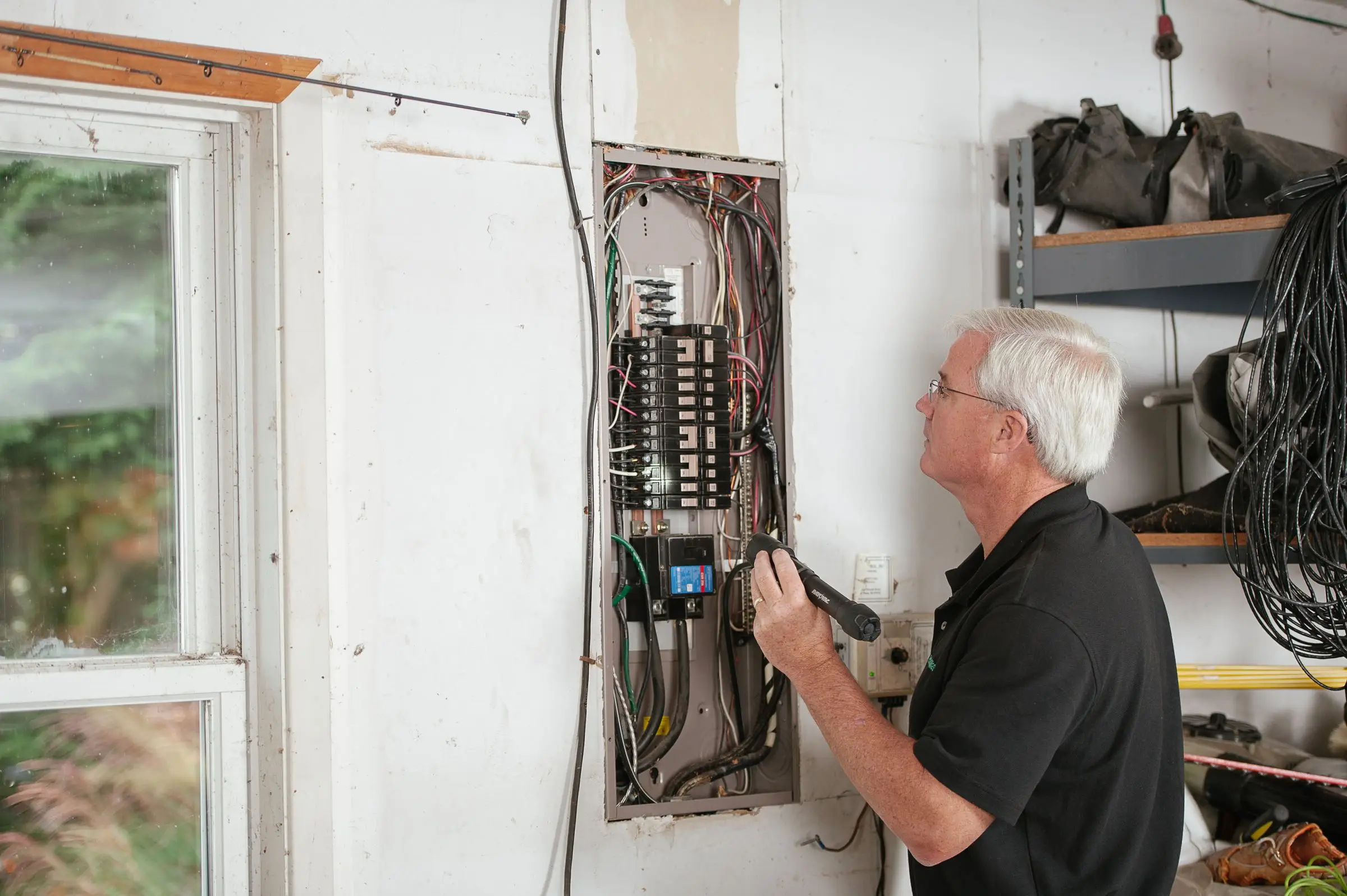
Electrician with a flashlight inspecting the breakers in an open residential electrical panel in a garage
Photo: Kathleen Austin Kuhn / Pexels

Our picks at a glance

Ranked by fit for this buyer. Prices from vendor pricing pages, checked Oct 18, 2026.

  1. 1.McCormick SystemsTop pick

    Best for plan takeoff and bids

    Quote only

    per vendor

    Not scored
  2. 2.ConEst IntelliBid

    Best for low voltage and solar

    Quote only

    per vendor

    Not scored
  3. Housecall Pro logo

    3.Housecall Pro

    Best for residential service

    From $59/mo

    billed annually

    4.1out of 5
  4. ServiceTitan logo

    4.ServiceTitan

    Best pricebook for 10+ techs

    Quote only

    price on request

    3.8out of 5
  5. Jobber logo

    5.Jobber

    Best budget pick, 1 to 3 trucks

    From $29/mo

    billed annually

    4.1out of 5
  6. Workiz logo

    6.Workiz

    Best for phone-driven service

    Quote only

    price on request

    3.8out of 5

Our picks, in detail

Our pickBest for plan takeoff and bids

McCormick Systems

McCormick has sold estimating software to electrical, plumbing and mechanical contractors for over 45 years, and it shows in the details. The electrical database lists 55,000+ items and 25,000 prebuilt assemblies, so a 2x4 troffer with whip, connectors and support wire goes in as one assembly instead of six lines. Takeoff happens on the PDF: point-and-click counts, linear runs, and a patented Auto Home Run feature that measures runs back to the panel. You can bid on McCormick's own labor units or three levels of NECA units, then print the proposal and the material list straight from the takeoff. McCormick says the system is cloud-based and multi-user, and it comes from the same company as Foundation job-cost accounting. Pricing is quote only, through a demo.

What we like

  • Auto Home Run and auto-count cut takeoff time on device-heavy plans
  • NECA labor units built in, at three levels
  • Distributor pricing updates keep wire and conduit costs current

Watch out for

  • Quote only, with no published pricing or self-serve trial
  • Does nothing for dispatch, invoicing or service calls
  • Hard to justify if you bid only a few plan jobs a year

Best for low voltage and solar

ConEst IntelliBid

ConEst IntelliBid is electrical-only, and its database is the largest of the dedicated tools: ConEst lists 140,000+ items and 500,000+ prebuilt, NEC-compliant assemblies covering electrical, low voltage, datacom and solar. Labor units come preinstalled with six difficulty levels, and Auto Labor Factoring adjusts for working height, floor count and run length, which is exactly where hand-built estimates leak money. It runs on a local PC, an office network or ConEst's CE Cloud. The catch is that it's sold in pieces. There are Standard, Plus and Pro editions priced by edition and user count, SureCount digital takeoff is sold separately, and supplier pricing feeds (NetPricer, EPIC, TRA-SER) are licensed on their own. Change orders and custom proposal templates come only with Pro.

What we like

  • Largest assembly library of the takeoff tools on this list
  • Labor factoring for height, floors and run length
  • Runs locally or in the cloud

Watch out for

  • Digital takeoff and pricing feeds cost extra
  • Change orders need the Pro edition
  • Quote only
Housecall Pro logo

Best for residential service

Housecall Pro

Strong marketing tools and a fast mobile app

4.1out of 5

Most small electrical shops don't bid from plans most days. They quote a 200-amp service upgrade, a generator interlock or a Level 2 charger with the homeowner standing there. Housecall Pro handles that well: build the estimate on the phone, attach photos of the old panel, send it for approval and turn it into a job without retyping anything. The MAX plan adds a sales proposal tool Housecall Pro values at $40/mo. Pricing is published, which is rare in this category: Basic is $59/mo (1 user), Essentials $149/mo (up to 5 users) and MAX $299/mo (up to 8 users), billed annually, as of October 2026. There is no takeoff, no labor units and no assembly database, so don't try to bid a strip mall in it.

What we like

  • Published pricing and a 14-day trial of MAX features
  • Estimates become jobs and invoices with no retyping
  • Clean customer-facing estimates on phone and email

Watch out for

  • No plan takeoff, labor units or assemblies
  • Proposal tool and the better features sit on MAX
  • Extra-user price on Basic and Essentials isn't published
ServiceTitan logo

Best pricebook for 10+ techs

ServiceTitan

Heavy-duty platform for established HVAC, plumbing and electrical shops

3.8out of 5

ServiceTitan earns its spot for one reason: the pricebook. If you price service work by task (per circuit, per device, per panel), a well-built pricebook is what keeps ten techs quoting the same job the same way. ServiceTitan sells Pricebook Pro as an add-on, and estimates tie into memberships, reporting and, on The Works plan, payroll. Techs can present tiered options on a tablet and close in the kitchen. It's quote only. Third-party estimates put it around $245 to $500 per technician per month, with implementation reported in the thousands of dollars (not published by the vendor). Owners commonly report a long setup, annual contracts and price increases at renewal. Below about eight techs, the math rarely works.

What we like

  • Strongest flat-rate pricebook tools in the field-service group
  • Estimates tie into memberships, reporting and payroll
  • Built for multi-tech residential and commercial service

Watch out for

  • Quote only; third-party estimates run $245 to $500 per tech per month
  • Long implementation and a steep learning curve
  • No plan takeoff for bid work
Jobber logo

Best budget pick, 1 to 3 trucks

Jobber

The easiest all-rounder for small residential crews

4.1out of 5

Jobber is the cheapest way on this list to send clean quotes with published pricing. Core is $29/mo billed annually for one user ($49 month to month), as of October 2026. Quotes support optional line items, so you can price a standard fixture package and an upgrade on the same quote, and the customer approves online. Approved quotes turn into jobs and invoices, and Jobber takes cards at 2.9% + 30¢ and ACH at 1%. What it doesn't have is anything electrical: no labor units, no assemblies, no material database. It suits the owner who prices from experience and wants to stop writing quotes on carbon paper. Five users on Connect cost $149/mo billed annually.

What we like

  • Lowest published entry price at $29/mo billed annually
  • Optional line items for good-better pricing on one quote
  • 14-day trial, no credit card

Watch out for

  • No electrical database, labor units or takeoff
  • Costs climb with users and add-ons
Workiz logo

Best for phone-driven service

Workiz

Built-in phones and call tracking for on-demand service work

3.8out of 5

Workiz fits the shop whose work starts with a ringing phone: no-power calls, tripped breakers that won't reset, a dead circuit in a kitchen remodel someone else botched. The estimate usually comes after diagnosis, on site, and Workiz handles that path from call to estimate to invoice, with inventory and job costing in the same app. Its phone and answering tools (Genius Phone, Genius Answering) are sold separately. Workiz moved to quote-only pricing in 2026, so you'll need a sales call, though there's a 7-day free trial. Like Jobber and Housecall Pro, it has no takeoff or labor units, so it's a service-side tool only.

What we like

  • Call-to-estimate-to-invoice flow suits emergency service work
  • Inventory and job costing included
  • 7-day free trial, no credit card

Watch out for

  • Pricing now quote only
  • Phone, AI answering and marketing cost extra
  • Owners report occasional mobile sync glitches

What electrical shops need from estimating software

Start by being honest about what you bid. A shop doing new-construction rough-ins, tenant improvements and small commercial work lives on plan takeoff. Somebody has to count every receptacle, switch and fixture on a 30-sheet set, measure every conduit run, pick a wire size, apply labor units, factor for 14-foot ceilings or a third-floor walkup, and roll it all into a number the GC wants by Friday. That job needs a database of electrical assemblies, labor units you trust and material prices that move when copper moves.

A residential service shop prices differently. The work is a 100-to-200-amp service upgrade, a whole-house surge protector, a subpanel for a garage shop, an EV charger with a load calc, or GFCI and AFCI updates to get a house through a sale inspection. Nobody reads plans. The tech needs a flat-rate pricebook, a way to show two or three options, photos of what's there now, and a signature before they leave the driveway. Permit fees and the inspection trip need to be on the quote, not discovered later.

Most shops between 3 and 15 people do some of both. That's why this list mixes dedicated takeoff tools with field service apps. Pick by where most of your estimating hours go, not by what you wish you bid.

A few things matter regardless of which side you're on:

  • Material pricing that stays current. Wire and conduit prices swing. A takeoff tool with a supplier pricing feed, or a pricebook you can bulk-update, saves you from bidding last quarter's copper.
  • Labor you can defend. Labor is most of the risk on any electrical bid. You want units you can adjust to your own crew's history, not a black box.
  • A clean handoff. Once the job is won, the estimate should become a budget, a material order and a schedule without anyone retyping it.

How the picks compare

The top two picks and the bottom four are different kinds of software, and the table above can make them look more alike than they are.

McCormick, ConEst and Accubid are bid tools. They read plans, count, measure, price and spit out a proposal. None of them will dispatch a truck or send an invoice. McCormick is our pick for most small shops that bid plans because it gives you takeoff, assemblies and NECA units in one product, without bolting on a separate takeoff license the way ConEst does with SureCount. ConEst wins if a real share of your work is low voltage, datacom or solar, where its assembly library is deepest. Accubid is the third name you'll hear, especially from estimators who came up through larger commercial shops. Trimble lists 42,000+ materials and 13,000 assemblies in Accubid Classic, and its LiveCount takeoff is cloud-based with a two-way link back to the estimate. Change orders are a separate product (Accubid ChangeOrder), so price that in if you do a lot of T&M and change work. All three are quote only, and you'll be sitting through demos either way. Bring the same plan set to each one.

Housecall Pro, ServiceTitan, Jobber and Workiz are field service apps that happen to estimate. They're where service quotes live, and they're where a bid ends up once you win it. Housecall Pro is the best fit for a residential shop of two to eight techs: published pricing, decent proposals, and estimates that flow straight into jobs and invoices. ServiceTitan is better at flat-rate pricing across a big team, but you pay for it in money and setup time. Jobber is the budget option and is genuinely fine for a one-truck shop. Workiz suits shops whose day is driven by inbound emergency calls.

One tool we left off the ranked list but would look at: Knowify. It isn't a takeoff tool, but for an electrical sub doing commercial work it covers what comes after the bid: contracts, job costing, and AIA-style progress billing with QuickBooks sync. Core costs $99/mo billed annually (1 user) and Advanced $329/mo (10 users), as of October 2026. A McCormick-plus-Knowify setup covers a lot of ground for a small commercial sub.

If you run other trades besides electrical, our roundup of estimating software for contractors covers the general-purpose tools.

What to look for before you sign

  • Run your own plans through the demo. Send the vendor a set you already bid and won (or lost). Compare their count and labor hours to yours. Generic demo jobs always look great.
  • Ask what the quote actually includes. For the takeoff tools, get a written list: takeoff module, supplier pricing feed, number of estimator seats, annual maintenance or subscription, training. ConEst prices its takeoff and pricing feeds separately; others bundle differently.
  • Check how labor units adjust. You should be able to apply a job-wide labor factor and edit individual units. If you can't make the software match your crew's real productivity, your bids will drift.
  • Test the handoff to the field. Can the won estimate become a material list, a budget by phase and a schedule? If your takeoff tool and your field app don't talk, budget an hour of retyping per job.
  • For service quoting, check options and pricebook updates. Make sure you can show good-better-best options and bulk-change prices when your supply house raises them.
  • Watch the seat math. Takeoff tools are priced per estimator, not per tech. A 15-person shop with one estimator needs one seat. Field service apps charge for every user who logs in.
  • Ask about contract length. ServiceTitan commonly sells annual contracts. Jobber and Housecall Pro offer monthly billing at a higher price than annual.

What it costs

Dedicated takeoff tools don't publish prices, so the table covers the field service apps and notes where the takeoff tools fit. Prices are as of October 2026, billed annually unless noted. Card fees are extra on all of them (Jobber, for example, charges 2.9% + 30¢ per card payment).

Shop size Jobber Housecall Pro ServiceTitan Takeoff tool (McCormick, ConEst, Accubid)
1 tech / owner-estimator $29/mo (Core, 1 user) $59/mo (Basic, 1 user) Not built for one tech Quote only, 1 seat
5 users $149/mo (Connect, 5 users) or $229/mo (Grow) $149/mo (Essentials, up to 5 users) Roughly $1,225 to $2,500/mo (third-party estimate) Quote only, usually 1 seat
15 users $299/mo (Connect) or $399/mo (Grow) About $544/mo (MAX $299 for 8 users + 7 users at $35) Roughly $3,675 to $7,500/mo (third-party estimate) Quote only, 1 to 2 seats

The ServiceTitan figures multiply third-party estimates of $245 to $500 per technician per month; ServiceTitan doesn't publish prices and implementation fees come on top. Workiz is quote only as of 2026, so it isn't in the table.

Say you run five trucks, do mostly residential service, and bid two or three small commercial jobs a month. A sensible setup is Housecall Pro Essentials at $149/mo for the service side plus one seat of a takeoff tool for the estimator. Get the takeoff quote in writing before you decide; it's the number that will swing your total.
Related guides

Questions owners ask

What software do electrical estimators use?

Estimators who bid commercial and multifamily work from plans mostly use dedicated takeoff and estimating tools: McCormick, ConEst IntelliBid and Trimble Accubid are the common names. Service and residential shops usually quote inside their field service app instead, such as Housecall Pro, Jobber or ServiceTitan. Plenty of 5 to 15 person shops run one of each: a takeoff tool for bids and a field service app for everything after the contract is signed.

Can Jobber or Housecall Pro do electrical takeoffs?

No. Neither reads plans, counts devices or applies labor units. They build line-item quotes from a price list you set up yourself, which works fine for service calls and small residential jobs. If you bid from drawings, you need a takeoff tool such as McCormick, ConEst or Accubid, or at least an on-screen takeoff program feeding a spreadsheet, before the number goes into your field service app.

How much does electrical estimating software cost?

The dedicated takeoff tools (McCormick, ConEst, Accubid) don't publish prices, so you'll get a quote after a demo. Ask what's included: takeoff module, supplier pricing feed, annual maintenance and extra estimator seats are often priced separately. On the service side, published prices as of October 2026 start at $29/mo for Jobber Core and $59/mo for Housecall Pro Basic, both billed annually.

Do I need NECA labor units?

They're a useful, defensible starting point, especially if you're new to bidding plan work. McCormick includes three levels of NECA units, and ConEst and Accubid ship their own standard units with factoring. The catch is that no book knows your crew. Track actual hours against estimated hours on your next ten jobs, then adjust the units or your labor factor so your bids match how your people really work.

What's the difference between McCormick, ConEst and Accubid?

All three do electrical takeoff, assemblies and labor units. McCormick also covers plumbing and mechanical and comes from the company behind Foundation accounting. ConEst is electrical-only, with the largest published database and strong low voltage and solar coverage, but takeoff and pricing feeds are separate licenses. Accubid is Trimble's product, with LiveCount cloud takeoff linked two ways to the estimate; change orders are a separate Accubid product. Demo all three on the same plan set.

Is there free electrical estimating software?

Not for real takeoff work. None of the dedicated tools on this page has a free plan. For simple service quotes, Jobber and Housecall Pro offer 14-day trials, and Workiz offers 7 days. A spreadsheet with your own assemblies can carry a one-truck shop for a while, but once you're bidding plan jobs regularly, a missed home run or a stale copper price costs more than the software.