Skip to content
BlueCollarStacks

Best Roofing Field Service Management Software

AccuLynx is the best roofing project management software for crews running a steady flow of installs, especially insurance work. Smaller retail roofers can run production on Roofr or Contractor Foreman for less.

By BlueCollarStacks EditorialUpdated

We may earn a commission from links on this page. How we make money

The short answer

Our pick

AccuLynx is the best roofing project management software for most established roofing companies.

Material orders, production scheduling, crew photos and job financials sit in one job record, and the Elite plan adds a production calendar plus supplement and commission tracking. It's quote only and pricey for a two-person crew, where Roofr or Contractor Foreman make more sense.

AccuLynx logo

AccuLynx

Roofing companies scaling up

Quote only

Request a demo · checked Oct 18, 2026

Roofing production is a weather-dependent puzzle. Material has to land the day before, the dumpster has to be there before tear-off, the crew has to show up on a dry day, and the final check, or the insurance depreciation, has to get collected after the last nail. Miss one piece and you've got shingles sitting on a driveway through a week of rain. We ranked five tools on how well they run that sequence for crews of 1 to 25 people. For estimating, CRM and the rest of the stack, see our guide to roofing contractor software.

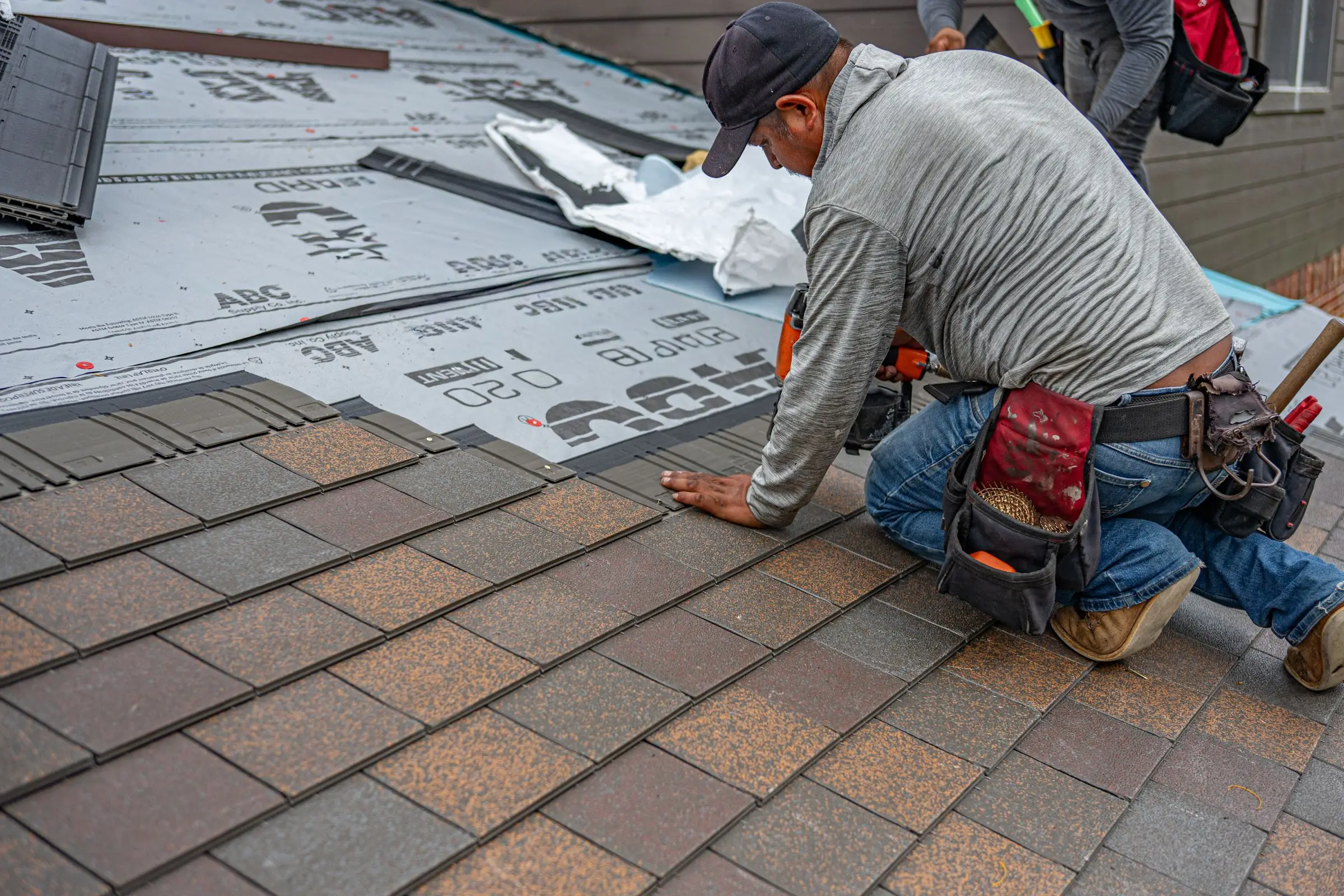
Roofer with a tool belt and nail gun installing asphalt shingles over roofing underlayment
Photo: Ryan Stephens / Pexels

Our picks at a glance

Ranked by fit for this buyer. Prices from vendor pricing pages, checked Oct 18, 2026.

  1. AccuLynx logo

    1.AccuLynxTop pick

    Best overall for production

    Quote only

    price on request

    4.0out of 5
  2. JobNimbus logo

    2.JobNimbus

    Best for board-style workflows

    Quote only

    price on request

    3.9out of 5
  3. Contractor Foreman logo

    3.Contractor Foreman

    Best budget all-in-one

    From $49/mo

    billed annually

    4.1out of 5
  4. Roofr logo

    4.Roofr

    Best for small retail crews

    From $109/mo

    billed monthly

    4.0out of 5
  5. CompanyCam logo

    5.CompanyCam

    Best for crew photo records

    From $63/mo

    billed annually

    4.1out of 5

Our picks, in detail

AccuLynx logo

Our pickBest overall for production

AccuLynx

Roofing-only platform with production and supplier ordering

4.0out of 5

AccuLynx is built around the roofing job as a sequence: sold, material ordered, delivered, scheduled, installed, inspected, paid. Material ordering connects to the job, so the order matches the estimate and the delivery date sits next to the install date. The Elite plan adds a production calendar, multi-location support, supplement tracking and commission tracking, which is what a storm-season company with three or four crews needs. AccuLynx is quote only, with a monthly subscription option and no long-term contract, and guided setup and training are included. Owners commonly report it's pricey for very small crews and takes real effort to set up the full workflow.

What we like

  • Material orders, scheduling and financials in one job record
  • Production calendar and supplement tracking on Elite
  • Monthly option with no long-term contract

Watch out for

  • Quote only; expensive for small crews
  • Setup takes real time to get right
JobNimbus logo

Best for board-style workflows

JobNimbus

Visual CRM boards built around the roofing sales cycle

3.9out of 5

JobNimbus runs production on boards: each job card moves from sold to ordered to scheduled to complete, and you can see the whole pipeline at once. Material orders, estimates and invoices attach to the job, and tasks keep crews and office staff on the same page. It's quote only. Third-party estimates from a competitor put Essentials near $225/mo, Pro near $550/mo and Premium around $1,200/mo, while Capterra lists a conflicting $300 per user per month (none published by the vendor). Users commonly report the mobile app trails the desktop, which matters if your production manager lives in the truck.

What we like

  • Visual boards make production status obvious
  • Tasks and automations keep handoffs from slipping

Watch out for

  • Quote only; third-party price estimates conflict
  • Mobile app weaker than the desktop
Contractor Foreman logo

Best budget all-in-one

Contractor Foreman

A lot of construction software for not much money

4.1out of 5

Contractor Foreman is a general construction project tool, not a roofing product, but it covers scheduling, dispatch, daily logs, change orders, time cards, photos, invoicing and even takeoff at a low published price. For a roofer who also does siding, gutters and small remodels, that breadth helps. Plans as of October 2026: Basic $49/mo (1 user, annual only), Standard $105/mo billed annually (up to 3 users), Plus $166/mo (up to 8 users) and Pro $221/mo (up to 15 users), with monthly billing higher. There's a 30-day trial. Users commonly report the interface feels busy with so many modules and that setup takes time.

What we like

  • Low published price with user caps instead of per-seat fees
  • Change orders, daily logs and time cards included
  • 30-day trial; 100-day money-back on some annual plans

Watch out for

  • Not roofing-specific; no supplement tracking
  • Busy interface with a learning curve
Roofr logo

Best for small retail crews

Roofr

Fast roof measurements and proposals with a free starter tier

4.0out of 5

Roofr is strongest at measurement and proposals, but its CRM and job tools are enough to run production for a retail roofer doing a few installs a week. The big advantage is no per-seat fees: every plan, including the free Starter plan, has unlimited users, so your crew lead and production manager don't cost extra. Paid plans as of October 2026: Measure+ $109/mo, Essentials $249/mo ($209 billed annually), Scale $349/mo ($299 annually). Users commonly report the CRM and production features are lighter than AccuLynx, so expect to outgrow it if you run multiple crews through storm season.

What we like

  • Unlimited users on every plan
  • Estimate to signed job to payment in one tool

Watch out for

  • Production tools lighter than AccuLynx or JobNimbus
  • Measurement report costs add up at volume
CompanyCam logo

Best for crew photo records

CompanyCam

The photo documentation app crews actually use

4.1out of 5

CompanyCam is the tool your crews will actually use. Every photo is time-stamped, located and filed under the job, so the production manager can see tear-off progress, rotten decking and the finished ridge without driving out. Photo checklists help enforce your install standard, and shareable reports go to homeowners and adjusters. Plans as of October 2026, billed annually: Core $63/mo (1 user, 2-user limit), Crew $119/mo (3 users), Scale $249/mo (3 users), plus $29/mo per extra user. It doesn't schedule or order material, so pair it with one of the others.

What we like

  • Crews adopt it fast
  • Photo checklists and shareable reports

Watch out for

  • No scheduling, ordering or job financials
  • Per-user fees add up for big crews

What roofing shops need from project management software

A sold roof turns into a short, tightly ordered project. Material gets ordered to match the estimate, and the supplier needs a drop date and placement notes ("driveway, not the lawn"). The dumpster arrives. The crew needs a dry day, and the homeowner needs a heads-up the night before. Tear-off reveals soft decking, which becomes a change order with photos. Then comes cleanup, a final inspection where your area requires one, the final invoice, and on insurance jobs the paperwork that releases the depreciation check.

The software has to tie those steps together so that moving one moves the others. When rain pushes Tuesday's install to Thursday, the material drop should move too, and the homeowner should get a text. Photos from the crew need to land on the job automatically, because they're your proof on the change order, the supplement and any later warranty claim.

Many roofing companies don't employ their install crews at all. They sub them out and pay per square, with extra for steep pitch, additional layers or decking. That means the software has to give an outside crew lead the job address, the material list and the photo checklist without handing them your whole customer list, and it has to make paying them per square easy to calculate from the final measurements.

Commissions matter more in roofing than most trades. If salespeople are paid on gross profit, job financials have to include material returns, change orders and the supplement before anyone gets paid.

How the picks compare

AccuLynx and JobNimbus are the two real roofing systems. AccuLynx is stronger on production, material ordering and the insurance side; JobNimbus is stronger on visual boards and flexible workflows. Both are quote only, so get written quotes for the same number of users and the add-ons you need.

Contractor Foreman and Roofr are the budget routes. Contractor Foreman covers general construction project management at a published price. Roofr is the better choice for a retail roofer who wants the sale and the job in one place with unlimited users. CompanyCam sits alongside any of them as the photo record.

If you're comparing tools built for service trades, start with our roundup of field service management software, but most roofing companies find those tools weak on material orders and production calendars.

What to look for before you sign

  • Delivery dates tied to install dates. Reschedule a job in the trial and see whether the material drop moves with it.
  • Change orders with photos. Rotten decking and extra layers happen weekly. Approval should take a minute on site.
  • Crew access. Can sub crews see only their jobs without paying for a full seat?
  • Commission reports. If you pay on gross profit, make sure the report includes change orders and supplements.
  • Supplement and depreciation tracking. Essential for insurance work.
  • Export. Photos and job records are your warranty evidence for years. Confirm you can get them out.

What it costs

Prices as of October 2026, billed annually unless noted.

Shop size Roofr Contractor Foreman CompanyCam AccuLynx / JobNimbus
1 person $0 (Starter) + $19 per report $49/mo (Basic) $63/mo (Core) Quote only
5 users $209/mo (Essentials, unlimited users) $166/mo (Plus, up to 8 users) $177/mo (Crew + 2 users at $29) Quote only
15 users $299/mo (Scale, unlimited users) $221/mo (Pro, up to 15 users) $467/mo (Crew + 12 users at $29) Quote only

Contractor Foreman's card processing is 2.9% + 30¢, with ACH at 1% + 30¢ capped at $10, which is cheap for large final payments: a $14,000 roof paid by ACH costs $10 to collect.

Related guides

Questions owners ask

What's the difference between a roofing CRM and roofing project management software?

A CRM tracks the sale: lead, inspection, estimate, signed contract. Project management tracks the build: material order, delivery, crew schedule, inspection, final payment. AccuLynx and JobNimbus do both in one record, which is why most roofing companies past a few crews end up on one of them. Smaller shops often use Roofr for the sale and a calendar for production.

How do roofers schedule around weather?

Most keep a short, firm schedule for the next few days and a flexible queue behind it. When rain hits, jobs slide in order, and material deliveries move with them. Software helps when delivery dates are tied to install dates, so rescheduling one prompts you to move the other. Text the homeowner automatically when the date changes.

Can roofing software track insurance depreciation?

AccuLynx Elite includes supplement tracking, which covers the requested-versus-approved side of a claim. Recoverable depreciation is usually tracked as a separate amount due on the job once completion paperwork goes to the carrier. Whatever tool you use, set a task to submit completion documents right after the final inspection, because that check is easy to forget.

Is Contractor Foreman good for roofing companies?

It's good for roofers who also do siding, gutters and remodeling, and want broad construction features at a low price, from $49/mo billed annually for one user. It lacks roofing-specific tools such as supplement tracking or measurement reports, so insurance-heavy roofers are better served by AccuLynx.