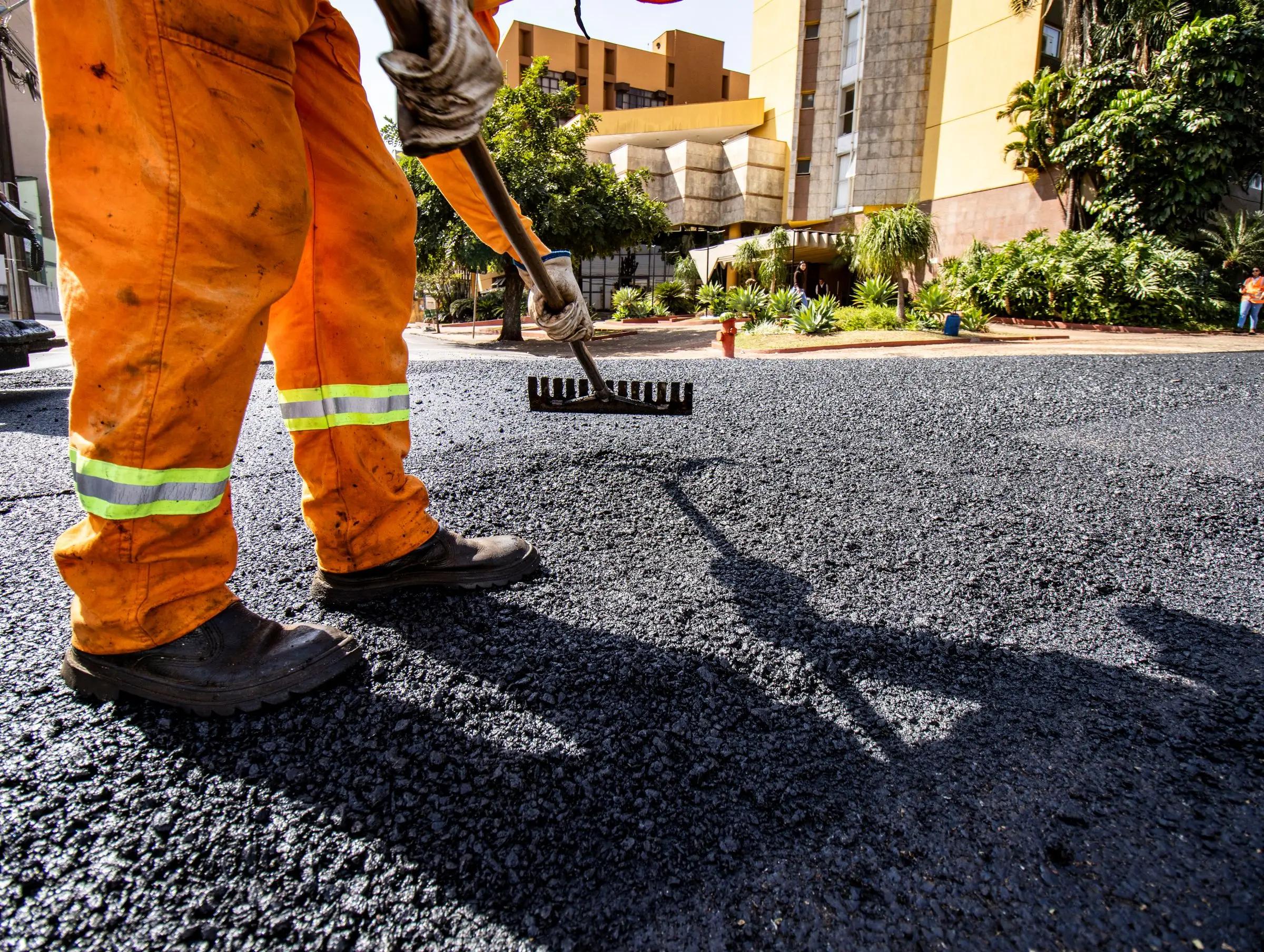
Paving is one of the trades the software industry mostly forgot. There are big heavy-civil estimating suites and there are generic quoting apps, and not much in between for a five-truck outfit doing driveways, parking-lot sealcoating and some flatwork. The good news is that a paving estimate is mostly geometry: square yards, depth, tons, gallons and linear feet of striping. Measure it right and almost any tool can price it. Below are the options we'd shortlist and the math that makes a general tool work. For the rest of your stack, see our guide to paving estimating software.
What paving shops need from estimating software
Paving estimates are built from a few quantities, each with its own trap. Area comes first, in square yards for asphalt and sealcoat and square feet for concrete. Get the area wrong by 10% and the whole number is wrong by 10%. Depth turns area into material. Then there's everything that isn't material: mobilization of the paver, roller and trucks, traffic control on commercial lots, a minimum job charge, and the half-day you lose when the plant runs late.
Residential driveway and sealcoating work is short, high-volume and price-shopped, so quote speed matters most. Commercial lots and concrete flatwork carry more risk: base repair, drainage, ADA stalls and striping layouts. That work needs job costing so you can see whether the bid held.
Because so few tools are paving-built, most owners set up assemblies in a spreadsheet and price per unit in their quoting app. Here's a hypothetical residential driveway, 1,800 square feet:
- Area: 1,800 sq ft ÷ 9 = 200 square yards.
- Asphalt: 200 sq yd × 2 in × 110 lb ÷ 2,000 = 22 tons, plus about 5% waste. Use your plant's density if it differs.
- Base stone: 1,800 sq ft × 0.5 ft (6 in) ÷ 27 = 33.3 cubic yards, times your quarry's tons-per-yard factor.
- Mobilization: a flat charge per move for the paver, roller and trucks, not hidden in the per-yard price.
- Labor and equipment: crew hours from your own production rates, plus trucking hours.
Sealcoating works the same way on a smaller scale: gallons = square yards × the manufacturer's coverage rate per coat × number of coats, plus sand, crack filler per linear foot and oil-spot primer. Striping prices per linear foot of line or per stall, with ADA symbols and stencils as separate items. For concrete, cubic yards = square feet × thickness in feet ÷ 27, plus 5 to 10% waste.
Once those assemblies give you a cost per square yard by service, load the sell prices into Jobber, Joist or Contractor Foreman as items. Re-check them when oil prices move, because liquid asphalt and sealer prices tend to follow crude.
How the picks compare
Go iPave handles the measuring, which is where small paving estimates usually go wrong, but it doesn't run your crew. Jobber and Joist run the quote and the invoice and nothing about the geometry. Contractor Foreman is the only general pick with takeoff and job costing for plan-based commercial work. A sensible setup for a residential crew is aerial measuring plus Jobber. A commercial bidder might use Contractor Foreman alone. For tools outside paving, see our roundup of estimating software for contractors.
What to look for before you sign
- Unit pricing by square yard and linear foot, with separate items for each service.
- Mobilization and minimum charges as their own lines.
- Measuring you trust, either aerial or a site sketch, saved with the quote.
- Deposit collection, since mix and sealer get ordered before the crew rolls.
- Job costing if you bid commercial lots, so trucking overruns show up.
- Photo attachments for existing cracks and damage.
What it costs
As of October 2026, billed annually where that's cheaper. Most paving crews need logins for estimators and foremen, not every laborer.
| Shop size |
Joist |
Jobber |
Contractor Foreman |
CompanyCam |
Go iPave |
| 1 user |
$14.17/mo (Pro) |
$29/mo (Core) |
$49/mo (Basic) |
$63/mo (Core) |
See vendor site |
| 5 users |
Not published per user |
$149/mo (Connect) |
$166/mo (Plus) |
About $177/mo |
See vendor site |
| 15 users |
Not published per user |
$299/mo (Connect) |
$221/mo (Pro) |
About $467/mo |
See vendor site |
For a five-person residential crew, Jobber Connect plus CompanyCam comes to about $326 a month before any measuring tool. Budget the spreadsheet time too; the assemblies are what make any of it accurate.