How to Start a Pressure Washing Business
A truck-mounted cold-water setup for house washes, driveways and decks typically costs $4,000 to $15,000. Insurance, wastewater rules and per-job pricing matter more than the machine.
We may earn a commission from links on this page. How we make money
Pressure washing has low startup costs, high hourly rates and a short learning curve, which is why the market fills with new operators every spring. The ones still busy in year three tend to have three things in common: they soft wash siding and roofs instead of blasting them, they carry real liability coverage, and they price by the job with a minimum charge. This guide covers the equipment you need on day one, the regulatory questions to ask (wastewater and chemicals especially), how to price, and the software that turns one-time washes into repeat clients.
Step 1: Choose your services and your customers
Decide what you'll wash before you buy equipment, because a residential house-wash business and a commercial grease and fleet business need different machines.
Most new operators start residential, with a menu like this:
- House washing (vinyl, Hardie board, brick, stucco) using soft wash, low pressure and cleaning solution.
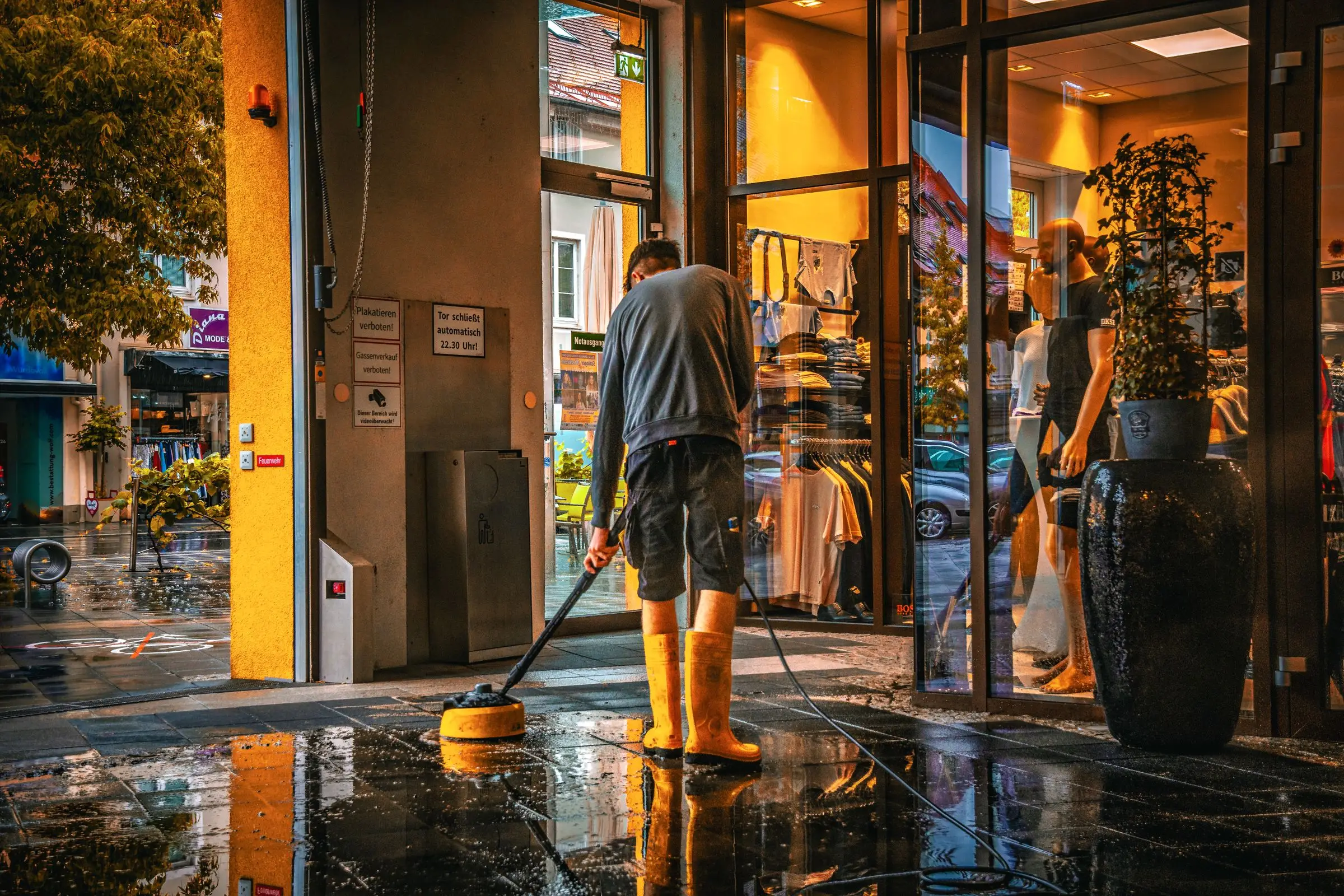
- Flatwork: driveways, sidewalks, patios and pool decks with a surface cleaner.
- Decks and fences, which take more care because wood is easy to damage.
- Roof cleaning, done with soft wash only. It's higher-ticket work with more liability; many owners add it in year two.
- Gutter brightening and window rinsing as add-ons.
Commercial work (storefronts, dumpster pads, drive-thrus, parking garages, fleet trucks) is often recurring and scheduled after hours, but it usually needs hot water, wastewater recovery equipment and higher insurance limits. It pays well once you're set up for it.
Pressure washing is seasonal in most of the country. Plan for a busy spring and summer, a decent fall, and a slow winter, unless you live where it stays warm or you add winter work like holiday light installation.
Step 2: Learn the wastewater and chemical rules before your first job
This is the part of the business most new operators skip, and it's the one that can bring a fine or a lawsuit.
Wash water and storm drains. Storm drains generally carry water straight to creeks, rivers and lakes without treatment. Under the Clean Water Act framework, cities run stormwater programs that commonly prohibit wash water from entering storm drains, and many specifically call out water containing soap, degreaser or bleach. Common practices are directing runoff onto grass or gravel where it can soak in, blocking nearby drains with mats or berms, and using a vacuum recovery system on commercial jobs. Rules vary by city and county, so call the stormwater or public works office in each town you serve and ask what they expect.
Chemicals. Soft washing relies on sodium hypochlorite (bleach) and surfactants. Handle them like the hazardous products they are: keep safety data sheets on the truck, wear chemical-resistant gloves and eye protection, store and transport them in labeled containers, and pre-wet and rinse plants before and after a wash. If you hire, OSHA's hazard communication rules apply to your employees.
The pesticide question. Products used to kill mold, mildew, algae or moss can fall under pesticide regulations, and states differ on how they treat soft washing. Your state's department of agriculture (or whichever agency runs pesticide licensing) can tell you whether your chemical washing requires an applicator license. Ask before you advertise "kills mold."
Business basics. Register an LLC or DBA with your state, get a free EIN from the IRS, and ask your city or county about a business license. Requirements and fees vary by state and locality.
Step 3: Get insured for property damage
Pressure washing breaks things. Water gets behind siding, a wand etches a concrete pad, bleach drift kills a client's prize hydrangea, or a ladder goes through a window. General liability insurance is the first thing to buy.
- General liability. Small pressure washing businesses typically pay around $500 to $2,000 a year. NEXT advertises general liability starting at $19/mo and Hiscox at $30/mo as of October 2026, but those are starting prices for low-risk classes, and exterior cleaning with chemicals usually quotes higher. Read the policy for exclusions on chemical damage, roof work and work above a certain height.
- Commercial auto. A truck with a 200-gallon water tank and chemicals on board is a work vehicle. Tell your insurer how you use it.
- Equipment coverage. Your machine, pumps and reels are worth thousands and sit in an open truck bed or trailer.
- Workers' comp once you hire, which nearly every state requires for employees, with rules that vary by state.
Commercial clients and property managers will ask for a certificate of insurance before you start, often naming them as additional insured.
Insurance pays for damage; habits prevent it. Most claims in this trade come from a short list of mistakes, and a two-minute walkaround catches most of them:
- Photograph the property before you start, especially existing cracks, peeling paint, oxidized siding and stains that won't come out. Rust and some oil stains often don't lift fully, and the client needs to hear that before the job, not after.
- Close windows and cover outlets, light fixtures and doorbells. Water forced into an outlet box is an electrician's bill.
- Pre-wet plants and rinse them again after, and keep chemical mix away from cars, pool water and koi ponds.
- Use the right pressure on the right surface. Low pressure and chemistry on siding, roofs and wood; high pressure only on concrete and similar hard surfaces.
- Get the client's sign-off on the conditions you noted. A line on the quote they approve online is enough.
Step 4: Buy equipment for the work you'll sell first
For residential house washing and flatwork, you can skip the hot-water machine and the giant trailer. A solid starting rig:
- A commercial cold-water pressure washer around 4 GPM. Flow (gallons per minute) cleans concrete faster than raw PSI. A gas belt-drive unit runs cooler and lasts longer than direct-drive consumer machines.
- A soft wash setup: a chemical pump, tank, hose and reel. This is what you'll use on siding and roofs, at low pressure.
- A surface cleaner for driveways and patios. It's far faster and leaves fewer stripes than a wand.
- A water tank of a few hundred gallons, because many outdoor spigots can't supply a 4 GPM machine and some clients won't have water access at all.
- Hose, reels, guns, wands and a full set of nozzle tips, plus spare O-rings, unloader parts and a pump oil change kit.
- Safety gear: eye protection, chemical-resistant gloves, slip-resistant boots and a respirator rated for chlorine fumes if you mix in enclosed spaces.
Before your first paid job, practice on your own driveway, a friend's house and a fence you don't care about. Learning how far to stand from Hardie board on a client's house is how you end up paying for it.
Step 5: Price by the job, with a minimum
Most operators price by the job, built from a target hourly rate and how long each surface takes. Clients compare on a total, so give them one.
Say your target is $110 per hour of on-site time, which has to cover your pay, fuel, chemicals, wear on the machine, insurance and software. You time yourself and find:
| Job | Your time | Math | Quoted price |
|---|---|---|---|
| 2,000 sq ft two-story vinyl house wash | 2.0 hrs | 2.0 × $110 = $220 | $225 |
| 800 sq ft driveway | 1.0 hr | 1.0 × $110 = $110 | $125 (minimum) |
| House wash + driveway bundle | 3.0 hrs | 3.0 × $110 = $330 | $325 |
| Small patio, 200 sq ft | 0.5 hr | 0.5 × $110 = $55 | $125 (minimum) |
The minimum charge matters. Every job has unloading, setup, pre-wetting plants, cleanup and drive time. A $55 patio that takes 30 minutes to wash still takes 90 minutes of your day.
Bundles raise the ticket without much extra setup. Once the rig is unrolled for a house wash, adding the driveway and sidewalk is mostly time on the surface cleaner. Offer bundle prices on every house wash quote.
Always walk the property before quoting a new client, or ask for photos. Look for oxidized siding (it can streak when washed), loose or damaged siding, unsealed outlets, delicate plants and old paint that might peel. Write those conditions on the quote. It protects you if a client says the paint came off because of you.
Step 6: Software you will need
Pressure washing is mostly one-time and once-a-year work, which means your software has two jobs: turn quotes into booked jobs fast, and remind past clients to book again next year. Many of the same tools built for house cleaners and other exterior services work well here, so start with our guide to software for cleaning businesses and look for these features:
- Quotes from your phone with photos, approved online, so you can quote from the driveway and book on the spot.
- Online booking or request forms connected to your calendar.
- Before and after photos attached to every job, for your protection on damage claims and for your marketing.
- Card payment on completion, so you leave paid.
- Automated follow-ups: a review request after the job and a reminder 11 months later.
Real options, prices as of October 2026:
- Jobber Core is $29/mo billed annually ($49 month to month) for one user, with quoting, scheduling and invoicing. Connect is $99/mo billed annually for one user. Card payments are 2.9% + 30¢. Owners commonly report costs climbing as they add users and add-ons like the Marketing Suite ($99/mo).
- Housecall Pro Basic is $59/mo billed annually for one user, and Essentials is $149/mo billed annually for up to five users. Card processing starts at 2.59%. Users commonly report that many advanced features sit on the MAX tier.
- CompanyCam is a photo documentation app, not a job manager. Its Core plan is $63/mo billed annually. It's worth it if you do roofs or commercial work where photo records prevent disputes, but most solo operators can get by with the photo features in their main job app.
Run a free trial with a real job: send a quote with photos, have a friend approve it, schedule it, mark it done, take a card payment and check that the review request goes out.
Step 7: Get your first jobs and make them repeat
Pressure washing is visual, which makes it easy to market. Use that.
- Before and after photos everywhere. Your Google Business Profile, Facebook, Nextdoor and a simple website. A half-cleaned driveway photo sells better than any ad copy.
- Door hangers near every job. Neighbors just watched their street's dirtiest driveway turn white.
- Property managers, HOAs and realtors. Pre-listing washes and HOA-required cleanings are steady work.
- Storefronts and restaurants for recurring commercial flatwork, once you can handle the wastewater and after-hours scheduling.
The real money is in repeat clients. A house wash client should hear from you every spring. Set an annual reminder on every completed house wash, offer a small discount for booking early, and you'll start each season with a calendar instead of an empty phone.
Step 8: Hire carefully and plan the slow season
Most owners stay solo through the first season, then add a helper to drag hose, prep plants and run the surface cleaner.
When you hire, treat helpers as employees: if you set the schedule, provide the equipment and direct the work, they're very likely employees under IRS and Department of Labor rules. Run payroll, carry workers' comp, and train on chemical safety before they touch the soft wash system.
For the slow months, service your equipment (pump oil, unloader, O-rings, belts), build next year's reminder list, and look at winter add-ons like holiday light installation or commercial contracts that run year-round. Some owners also use the winter to price and test roof cleaning, so it's ready to sell in spring.
Startup costs at a glance
| Item | Low | High | Notes |
|---|---|---|---|
| Pressure washer (cold water, 4 GPM class) | $800 | $2,500 | A gas, belt-drive commercial unit. Gallons per minute matters more than PSI for cleaning speed. Hot-water units cost several times more and are mostly for commercial grease and fleet work. |
| Soft wash system | $600 | $3,000 | A 12-volt or gas chemical pump, a chemical tank, hose and reel for low-pressure house and roof washing. |
| Surface cleaner, hoses, reels and nozzles | $500 | $1,800 | A 16- to 20-inch surface cleaner for flatwork, 200 ft or more of pressure hose, a hose reel, guns, wands and quick-connect nozzles. |
| Water tank and mounting (skid or trailer) | $500 | $5,000 | Low end is a tank and skid in a truck bed you already own; high end is a dedicated trailer build. |
| Starting chemicals and safety gear | $150 | $500 | Sodium hypochlorite, surfactant, degreaser, neutralizer, plus chemical-resistant gloves, eye protection and boots. |
| Business registration and local license | $35 | $800 | State LLC or DBA filing plus any city or county business license. Varies by state and locality. |
| General liability insurance | $500/yr | $2,000/yr | Typical range for a small operator. NEXT advertises GL from $19/mo and Hiscox from $30/mo as of October 2026, but pressure washing usually quotes above starting prices. |
| Software | $0/mo | $150/mo | Jobber Core is $29/mo billed annually; Housecall Pro Basic is $59/mo billed annually (October 2026). |
Setup checklist
- Register the business, get a free EIN from the IRS and ask your city or county about a business license.
- Call your local stormwater or public works office and ask where wash water can and can't go in each town you serve.
- Ask your state department of agriculture whether using chemicals to kill mold, mildew or algae counts as pesticide application in your state.
- Buy general liability coverage that includes your chemical work, and compare quotes on our page about insurance for contractors.
- Write per-surface pricing and a minimum job charge before you post your first ad.
- Use invoicing software for contractors that lets clients approve a quote and pay by card the same day you finish.
- Put every job in field service management software with before and after photos, the property's water spigot location and notes on plants to pre-wet.
- Set a yearly reminder for each house wash client so next spring's work is booked before the phone starts ringing.
- Build a pre-job walkaround checklist: outlets and lights covered, windows closed, cars moved, plants watered, oxidized siding noted.
- Before hiring a helper, set up one of the contractor payroll services and add workers' comp.
Questions owners ask
How much does it cost to start a pressure washing business?
A basic setup for residential house washing and flatwork, mounted in a truck you already own, typically costs $4,000 to $15,000. That covers a commercial cold-water machine, a soft wash system, a surface cleaner, hoses, a water tank, chemicals, insurance and registration. A dedicated trailer and a hot-water machine push the total higher.
Do I need a license to pressure wash?
Most places don't have a pressure washing license, but you'll typically need a business registration and a local business license. Requirements vary by state and city. Some localities regulate where wash water can go, and some states may treat chemical washing that kills mold or algae as pesticide work. Check both before you start.
Can wash water go down the storm drain?
Usually not. Under the Clean Water Act framework, storm drains generally flow untreated to creeks and lakes, and many cities prohibit wash water, especially with soap or bleach, from entering them. Common fixes are diverting water onto grass or gravel, blocking drains and vacuuming up runoff. Rules vary by locality, so ask your stormwater office.
How much should I charge for pressure washing?
Price by the job, using your target hourly rate and how long each surface takes you. Many operators quote house washes by size and flatwork by square foot, then apply a minimum job charge so small jobs still cover the drive and setup. Bundles like house wash plus driveway raise the average ticket.
Is soft washing better than pressure washing for houses?
For siding and roofs, low-pressure soft washing with cleaning chemicals is the standard approach because high pressure can damage siding, force water behind it, strip paint and void roofing warranties. High pressure is mainly for concrete and other hard flatwork.